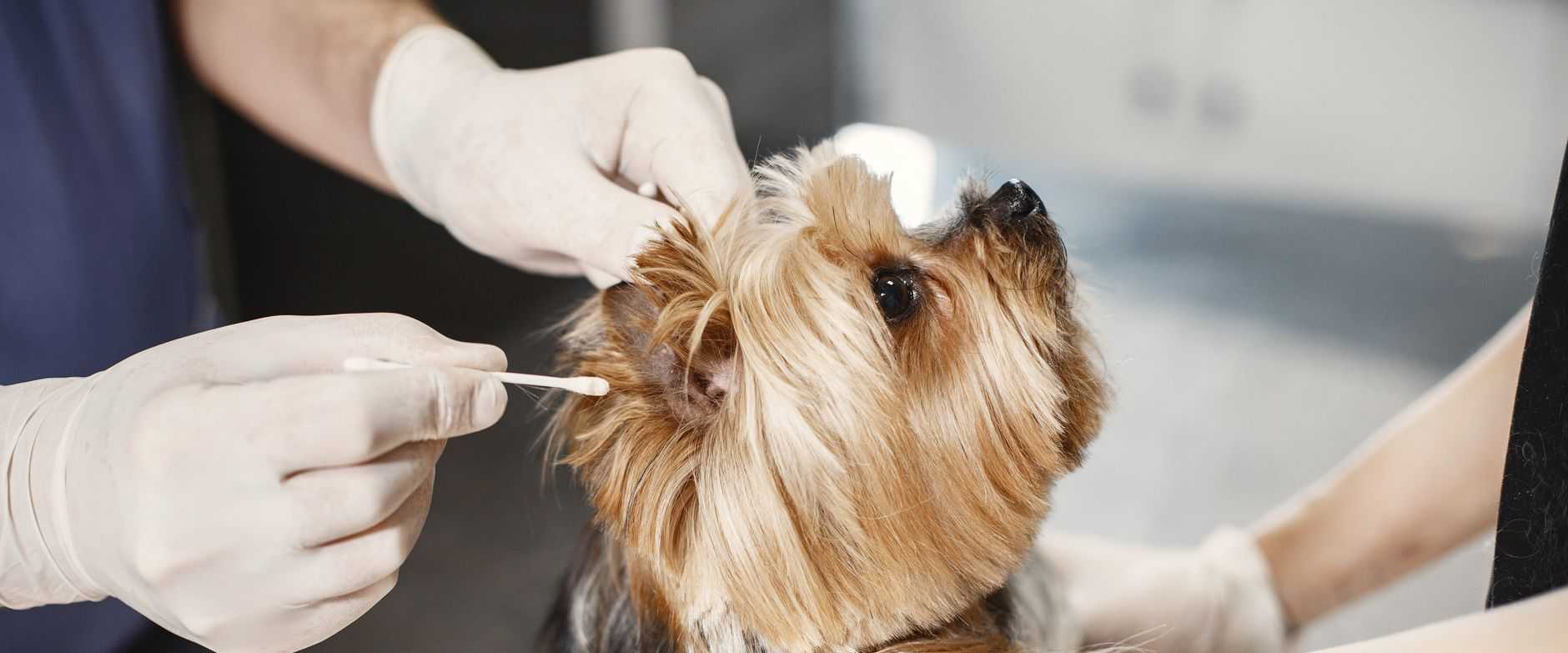
Ear Cleaning
What ear cleaning is, why it matters for treating ear infections, and why healthy pet ears do not need routine cleaning.
Also known as Ear Care, Ear Hygiene
Pet ears are surprisingly complex. Unlike a human ear canal, which runs straight inward, a dog or cat's ear canal is shaped like an L, with a vertical section that drops down before turning horizontally toward the eardrum. This structure makes it easy for wax, debris, and moisture to become trapped, and it means that anything pushed in from the outside tends to get packed deeper rather than coming back out.
Ear cleaning is the mechanical removal of built-up earwax, cellular debris, and discharge from the ear canal using a liquid cleansing solution. In a veterinary context, these solutions contain ingredients like ceruminolytics (which break down wax), surfactants, or drying agents, all designed to be safe for the delicate skin lining the ear.
The most important thing to know about ear cleaning is that healthy ears do not need it. Both the 2022 AAFP/ISFM Cat Friendly Guidelines and the Bundestierärztekammer make this clear: a pet with normal, comfortable ears has a natural self-cleaning mechanism, and routine cleaning offers no benefit. Over-cleaning strips the ear canal of its natural protective oils and can cause mechanical irritation that leads to the very inflammation you were trying to prevent.
So when does ear cleaning matter? It becomes essential when there is a problem. In cases of otitis externa (inflammation of the outer ear canal), accumulated wax and pus physically block topical medications from reaching the skin. Certain antibiotics, including polymyxin and aminoglycosides, can also be directly inactivated by purulent discharge. Clearing the canal before applying medication is therefore a critical first step in treatment. Cleaning also removes the organic material that feeds yeast like Malassezia and supports bacterial biofilms, reducing the overall infection load.
The signs that a pet may need ear care include frequent head shaking, scratching at the ears, dark discharge, redness, a foul smell, and sensitivity when the ear is touched. If you notice any of these, a veterinary examination is the right next step, because what looks like a simple wax buildup could be ear mites, a yeast overgrowth, or a resistant bacterial infection such as Pseudomonas, each of which requires a different treatment approach.
The basic cleaning technique, as outlined by Virbac, involves filling the ear canal with a veterinary ear cleaner, massaging the base of the ear for 10 to 20 seconds to loosen debris, letting the pet shake its head, and gently wiping the accessible outer ear with clean cotton wool. Washington State University advises waiting about 15 minutes for the canal to dry before applying any prescribed medication.
There are a few warnings every owner should know. Never insert cotton swabs or Q-tips into the ear canal: they push debris deeper and can puncture the eardrum. Never use household products like rubbing alcohol, vinegar, hydrogen peroxide, or soap, which cause painful irritation and mucosal damage. And if there is any chance the eardrum is ruptured, only non-ototoxic solutions such as sterile saline or Tris-EDTA should be used, a decision that must be made by a veterinarian.
Some dogs are simply more prone to ear trouble. Breeds with floppy or pendulous ears, such as Spaniels or Poodles, and those with narrow or particularly hairy ear canals face a higher risk of otitis externa. For these pets, a veterinarian may recommend a maintenance cleaning schedule of every 1 to 2 weeks, though active infections sometimes require daily cleaning under professional guidance.
Deep flushing for chronic or severe otitis is not a home procedure. It is performed by a veterinarian under general anaesthesia with airway protection, ensuring that fluid draining through the Eustachian tube does not reach the lungs.
Ear cleaning is a genuinely useful tool in managing ear disease, but it is not a grooming habit for the average pet. When it is needed, using the right solution and the right technique matters every bit as much as doing it at all.