Tierärzte-Team Dreieich
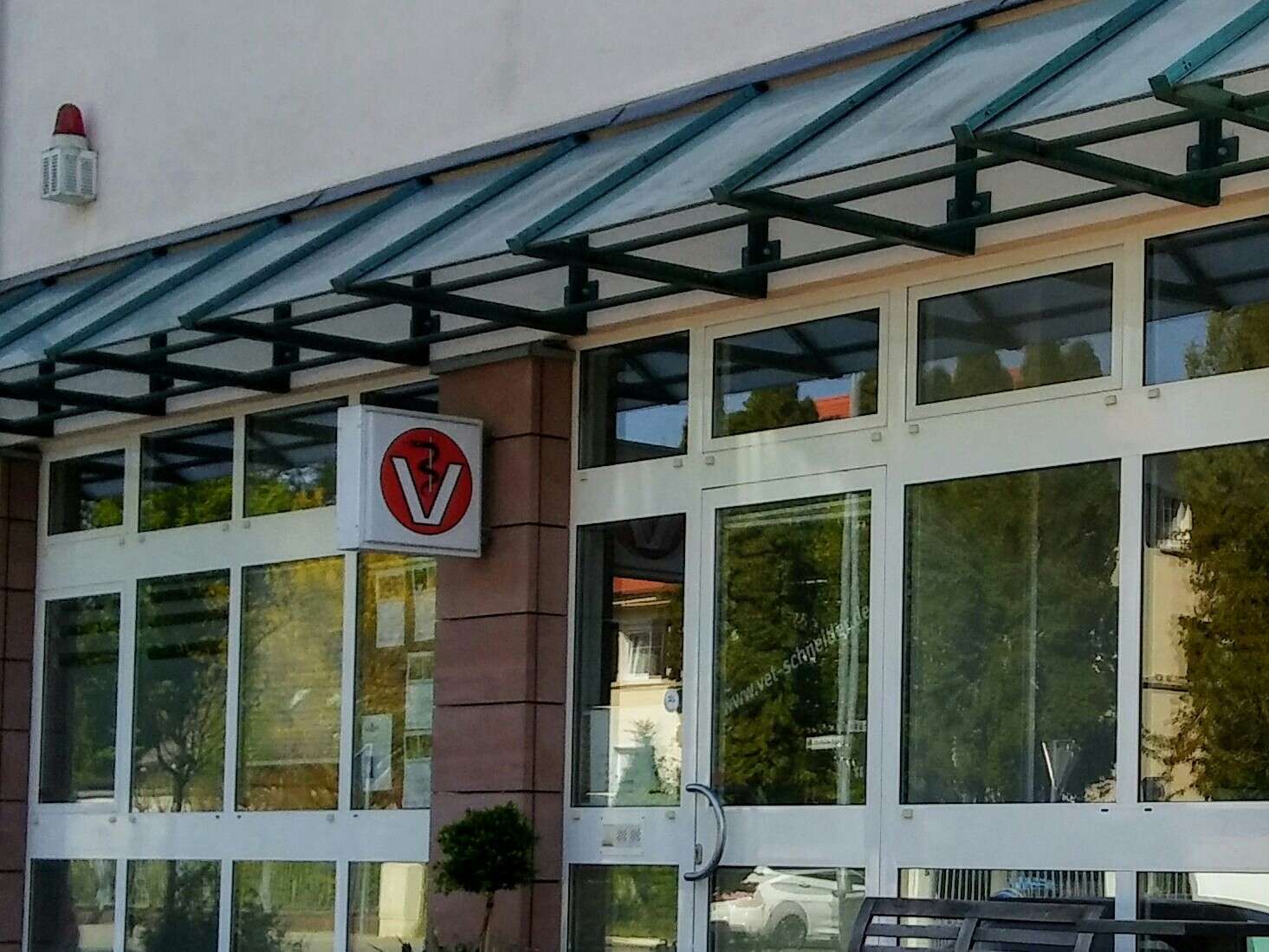
Practice in Eisenbahnstraße 206, 63303 Dreieich, Germany
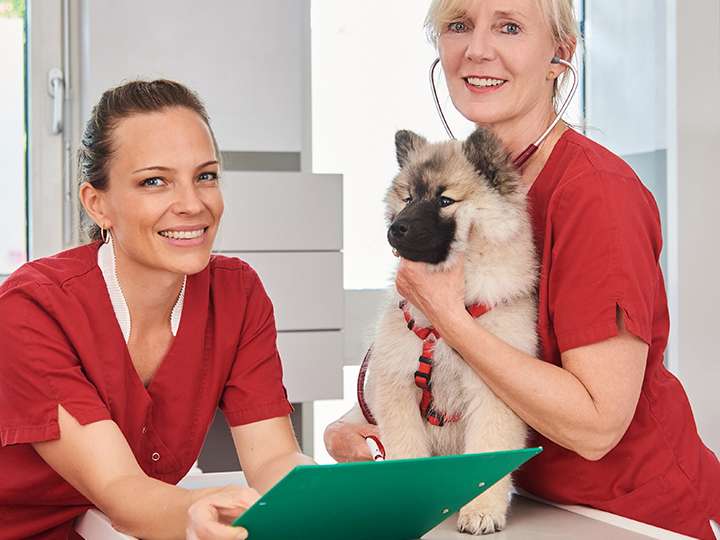

The Tierärzte-Team Dreieich cares for small pets of all sizes, from hamsters to Great Danes, combining years of experience with state-of-the-art equipment: digital radiography with dental X-rays, ultrasound including cardiac diagnostics, ECG, endoscopy, and an in-house laboratory. A key focus of the practice is dentistry—its dedicated dental unit offers professional teeth cleaning, tooth extraction, and tooth-preserving treatments ranging from fillings and root canal therapy to braces. Surgeries are performed using inhalation anesthesia and modern monitoring, with a spectrum ranging from spays and neuters and tumor removals to cesarean sections. Before any anesthesia, the team takes time for blood, X-ray, and ultrasound examinations to ensure that even older pets or those with heart conditions receive safe care.
Treated animals
Small Animals & Pets
- cats
- dogs
- rabbits
- small rodents
Medical focus areas and specializations
- cardiology
- dentistry
- ECG
- endoscopy
- internal medicine
- nutrition counseling
- ophthalmology
- surgery
- travel advice
- ultrasound
- vaccinations
- x-ray
Services
- LaboratoryOn-site blood, urine, and tissue analysis
Opening hours
- Monday
- 10:00 AM–12:00 PM4:00 PM–7:00 PM
- Tuesday
- 10:00 AM–12:00 PM4:00 PM–6:00 PM
- Wednesday
- 10:00 AM–12:00 PM
- Thursday
- 10:00 AM–12:00 PM4:00 PM–6:00 PM
- Friday
- 10:00 AM–12:00 PM4:00 PM–6:00 PM
- Saturday
- 10:00 AM–12:00 PM
- Sunday
- Closed
Appointments & new clients
- Monday
- 10:00 AM–12:00 PM4:00 PM–7:00 PM
- Tuesday
- 10:00 AM–12:00 PM4:00 PM–6:00 PM
- Wednesday
- 10:00 AM–3:00 PM
- Thursday
- 10:00 AM–12:00 PM4:00 PM–6:00 PM
- Friday
- 10:00 AM–12:00 PM4:00 PM–6:00 PM
- Saturday
- 10:00 AM–12:00 PM
- Sunday
- Closed
Spoken languages
- 🇩🇪 German
- 🇬🇧 English
- 🇮🇹 Italian
Contact
- Book appointment
- Website
- Email
- Phone
- Fax
Practice location
Tierärzte-Team Dreieich
Practice location
Eisenbahnstraße 206
63303 Dreieich
Germany
Team 10
Annette Schneider
Practicing veterinarian, practice owner
Dr. Anna Elisabeth Löwenstein
Practicing veterinarian
Dr. Sandra Schack
Practicing veterinarian
Monika Eickhoff
Practicing veterinarian
Dr. Paula Marie Hawlitschek
Practicing veterinarian
Cornelia Wabnitz-Löffler
Business communication specialist, reception, ordering, and accounting
Lena Mebs
Veterinary assistant
Jasmin Hoffmann
Veterinary assistant
Sina Nowak
Veterinary assistant
Giulia Felice
Veterinary assistant
Reviews
They are very friendly and professionals, I have confidence in the team
Great service, also in English
Last week, I took my cat Pamuk to Dr. Schneider for his first veterinary appointment. Pamuk and I immediately felt a great deal of trust in her, and he received very professional treatment. I can highly recommend both the practice and the veterinarian.
In April 2025, we brought our dog (Bolonka, 7.5 years old) here for a second opinion. During the initial consultation, we were told that the situation could only be assessed after an X-ray of the teeth during the dental surgery. In the medical history form, I clearly stated that no fixed molars or canines should be extracted. During the surgery, we were called in and told that "all" the teeth had to come out. Through tears, I repeatedly asked if it wasn't possible to leave the two lower canines, as these act as guides for the tongue and were completely fixed. Dr. L. replied that it was too late for that; we would be back in six months. The surgery was stopped after teeth from half the jaw had been removed due to excessive blood loss. During the second surgery (four weeks later), I asked for an explanation based on the X-rays as to why all the teeth had to be removed, given the already contradictory findings. Statements regarding the X-rays taken. A long search ensued; I was shown the wrong images, and I had to point out that they weren't of our little one. Seven minutes after we left the doctor's office, the vet called to say that Krümel's eye had popped out during the pre-operative preparation. They needed our consent for an incision to put the eye back in place. We witnessed them trying to get help from other clinics by phone. The eye was put back in place and stitched up. During the surgery, we were called in and told that they would leave one of the lower canines in place because, although it looked bad on the X-ray, it didn't appear so after a visual examination. This was a complete contradiction. They probably would have had to spend a lot of time and effort removing this firmly embedded canine. We got Krümel back in an absolutely disastrous state. The entire eye was stitched shut, and half of her head was severely swollen. This was Krümel's fifth surgery; there had been no problems in any of the previous surgeries (at other clinics). Four days later, we drove 100 km to a specialized eye clinic, where the eye was treated. For weeks, we worried sick about her eye. The veterinary ophthalmologist, in her decades of experience, had never heard of such an incident during surgery. We will probably never know what happened during the pre-operative preparation. The surgeons have no explanation. Since the treatment at that clinic, our dog has developed severe behavioral problems. Our Krümel spends all day, constantly trying to pull her tongue back into her mouth. She shakes her head and tries to use her paw to get her tongue in. At night, we are repeatedly woken up by these noises and have to calm her down again. We wouldn't have this problem if her lower canine tooth were still intact, as we wanted it to be! As paying customers, it's incomprehensible that they would extract teeth against our will that are crucial for supporting the tongue. The lower canine tooth, which wasn't extracted during the disastrous surgery due to time constraints (they wanted to finish the second operation quickly), is (contrary to the dentist's statement during the operation) still completely firmly in place after almost 10 months! This is causing major problems with eating and drinking. Our little one and we now have to live with this absolute disaster. I blame myself every single day for bringing our little one to this practice. They didn't take my previously "repeatedly justified concerns" seriously at all; quite the opposite. I'm not a layperson, but I bred Bolonkas for several years and know the importance of the lower canines. The surgical report indicated a scissor bite, which raises serious doubts when a dentist specializing in teeth can't distinguish a severe overbite from a scissor bite. scissor bite The second surgery bill was waived, and the follow-up costs for the eye treatment were covered by the practice owner's insurance. One star is still too much.
I felt my seriously ill dog was in excellent hands with Dr. Löwenstein. She was very competent, friendly, and empathetic towards both dog and owner. The final farewell was conducted in a dignified and peaceful atmosphere, and I received a handwritten, personal, and comforting sympathy card. I can wholeheartedly recommend the team and would like to thank them again.
Frequently asked questions
Dogs and cats rarely show dental pain; they often keep eating and suffer in silence. That is why the entire oral cavity is examined under anesthesia, with every tooth probed and dental X-rayed so that hidden conditions such as periodontitis, fractured teeth, or resorptions do not go unnoticed. Depending on the findings, this is followed by professional dental cleaning, an extraction, or tooth-preserving measures such as a filling, root canal treatment, crown, or braces.
For older pets, the practice recommends a blood test, a chest X-ray, and an abdominal ultrasound before any planned procedures. This makes it possible to detect and treat changes in the heart, lungs, or spleen in good time before the actual surgery takes place.
The practice recommends spaying female rabbits from about six months of age, as up to 80 percent of unspayed females over four years old develop uterine cancer; cysts and uterine infections also occur frequently. For male rabbits, there are no fundamental medical reasons in favor of neutering.
The pet should be brought in immediately. If the ingestion happened only a short time ago, the practice can induce vomiting and thus remove some of the poison; later on, products that bind residues in the gut are helpful. For active ingredients that cause bleeding only days later, a longer course of treatment with vitamin K is necessary.
The practice does not offer its own emergency service. For emergencies, it lists veterinary clinics in the area on its website that can be reached around the clock, and asks that you call them in advance to announce your arrival.
Veterinary practices nearby



Are you the owner or a team member of this practice? Claim this profile to manage it yourself.