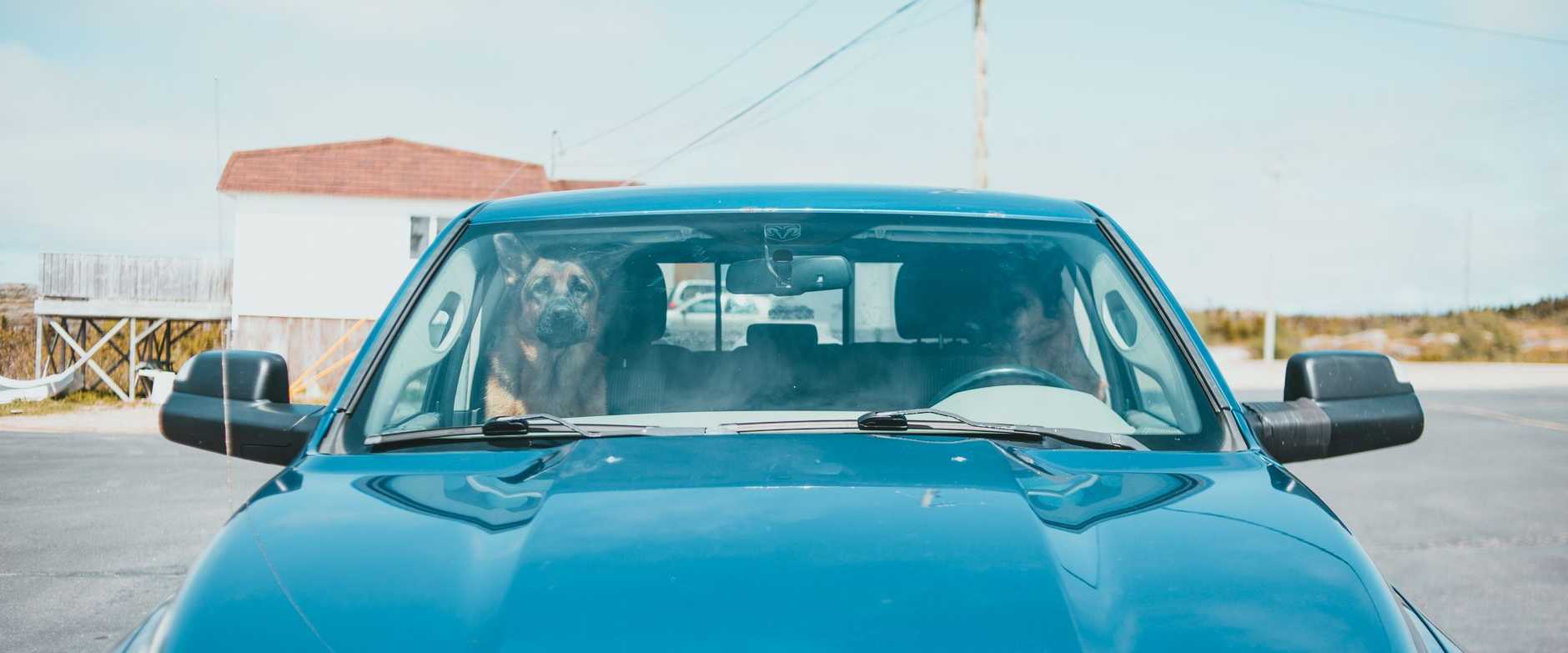
Hot Car Danger
Why parked cars become deadly for dogs and cats within minutes, how to recognise heatstroke, and what to do before it is too late.
Also known as Pets in Hot Cars, Heatstroke in Cars, Dog in Hot Car
Leaving a pet inside a parked car, even on a day that feels only pleasantly warm to you, can turn deadly within minutes. The interior of a vehicle acts like a greenhouse: sunlight enters through the windows, heats the surfaces inside, and that warmth has nowhere to escape. The result is a temperature climb that catches most owners off guard.
On a 21°C day, the inside of a car reaches roughly 43°C in an hour. At 30°C outside, the cabin can exceed 60°C in just 30 minutes. Cracking the windows open does not slow this process down in any meaningful way, and parking in the shade offers false reassurance because the sun moves, often exposing the car to direct light within half an hour. Researchers at Nottingham Trent University found that vehicle interiors exceeded 25°C in every month of the year, not only in summer.
Dogs and cats have very limited ways of cooling themselves. Dogs lack functional sweat glands across most of their body; the few they have are confined to their paw pads. Their main cooling mechanism is panting, which uses evaporation from the tongue and respiratory tract to shed heat. But panting reaches its physiological limit when the surrounding air rises above about 28°C, especially in a sealed car with no airflow. Cats are even less equipped to cool themselves through active behaviour because they instinctively avoid exertion in the heat. When a cat is trapped inside a hot car, greenhouse, or shed, its body temperature climbs unchecked.
A pet's normal body temperature sits between 38.0°C and 39.2°C. Once it rises above 40.0°C to 41.0°C, brain swelling, cardiac failure, and irreversible cell damage begin. The signs of heatstroke include rapid heavy panting or open-mouthed breathing, a bright red tongue, thick saliva, drooling, vomiting, unsteadiness, confusion, seizures, and collapse. Flat-faced breeds like Pugs, Bulldogs, and Pekinese are at even greater risk because their compressed airways make panting far less efficient. Older dogs, overweight animals, large breeds over 15 kg, and pets with existing heart or respiratory conditions also succumb much faster.
If you find a pet in distress inside a hot car, the priority is cooling before transport. Veterinary research now supports the protocol known as cool first, transport second. The most effective method is cold-water immersion or pouring cool water over the animal while directing a fan or air current across them to create evaporative cooling. Water between 0.1°C and 15°C is safe and effective for young, healthy dogs. Do not drape wet towels over the body; they quickly trap heat instead of releasing it. Once cooling has begun, get the animal to a veterinary clinic immediately for intravenous fluids, oxygen, and monitoring for organ damage.
Leaving an animal in a hot car is also a legal offence. In Austria it carries fines of up to 7,500 euros; in Germany, it violates the Tierschutzgesetz and can result in fines up to 25,000 euros or imprisonment. If you come across a trapped pet showing acute signs of collapse or unconsciousness and emergency services cannot arrive in time, breaking a window is legally protected under the doctrine of necessity in both German and Austrian law. You should still attempt to locate the owner or alert the police first if time allows.