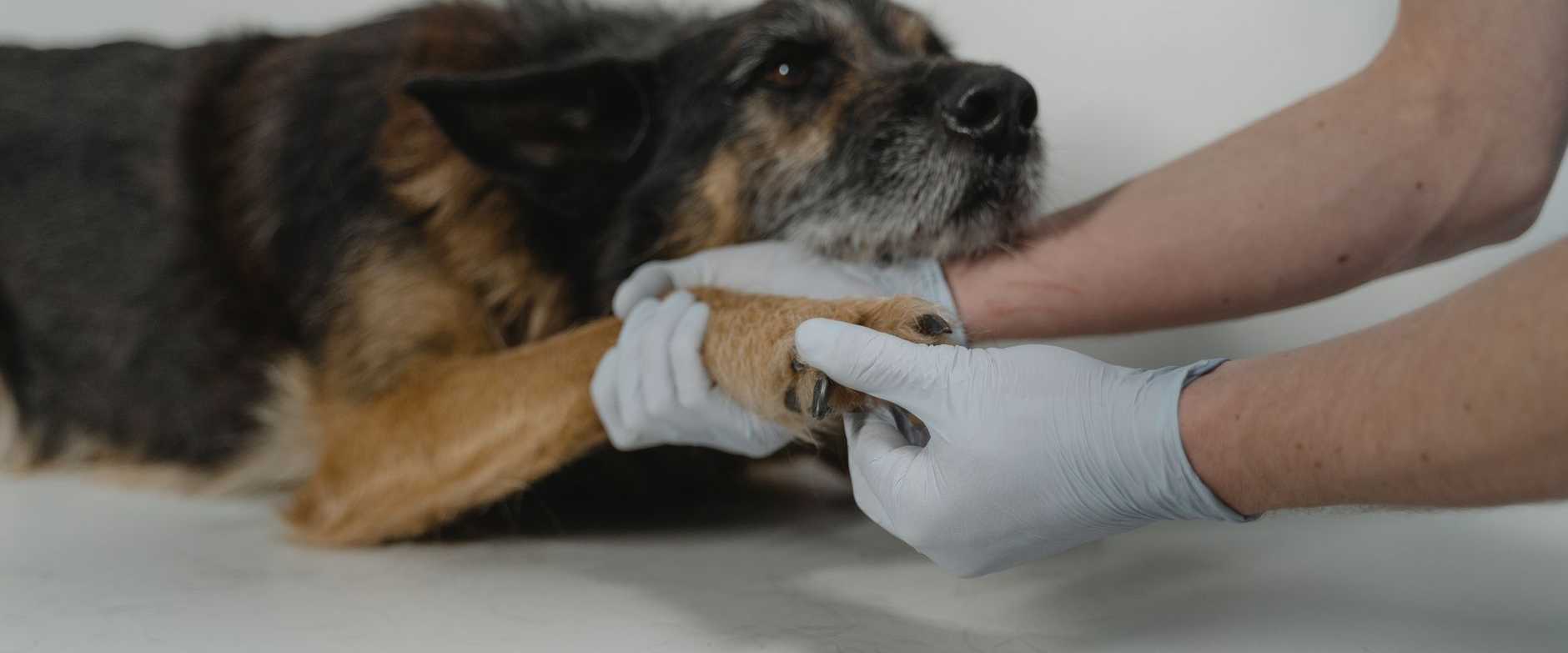
Paw Care
Keeping a pet's paw pads, interdigital skin, and claws healthy through routine care and early detection of conditions like pododermatitis and hyperkeratosis.
Also known as Paw Health, Foot Care
A pet's paws do far more than leave muddy prints on the floor. The digital, metacarpal, and metatarsal pads act as shock absorbers with every step, provide traction for running and turning, and contain sweat glands that help with temperature regulation and scent marking. Between the pads, the interdigital skin and nail folds are equally important, and keeping all these structures healthy is what paw care is about.
Paw problems often show up as persistent licking, which owners easily mistake for normal grooming. The American Kennel Club points out that relentless paw licking usually signals allergic itching, interdigital pain, or a brewing bacterial or yeast infection. Other warning signs include redness, swelling, hair loss around the paws, reddish-brown saliva staining on the fur, discharge, and limping. When a vet examines these symptoms, they are looking at pododermatitis, an inflammatory condition affecting the structural components of the paw. A retrospective study of 300 canine cases found that allergic skin disease was the primary trigger in 131 dogs, with parasitic mites like Demodex canis and sarcoptic mange following behind.
The World Association for Veterinary Dermatology emphasises that pododermatitis is a clinical presentation, not a diagnosis in itself. Treating it with antibiotics alone, without identifying the underlying cause, frequently leads to treatment failure and scarring of the skin. This is why a vet will often recommend diagnostic steps like skin scrapings or hair plucks rather than reaching straight for medication.
Seasonal extremes create their own risks. On a 30°C day, asphalt can reach 57°C, hot enough to burn paw pads in under a minute, as the AAHA reports. In winter, de-icing salts and chemical ice melts cause painful pad cracking, and if a pet licks them off, gastrointestinal upset can follow. Central European veterinary guidelines recommend washing paws with lukewarm water after winter walks to remove salt and grit, trimming long hair between the pads to prevent ice balls from forming, and applying a protective paw balm before heading outside. During summer, the Bundestierärztekammer advises sticking to early morning or late evening walks and checking the ground with the back of your hand before letting a pet step onto it.
Some conditions deserve special attention. Paw pad hyperkeratosis, where pads become thick, rigid, and prone to cracking from excess keratin, does not respond to standard human moisturisers or petroleum jelly. These surface products cannot break down the keratin overgrowth and may cause digestive upset if licked. Cats have their own peculiar paw condition: plasma cell pododermatitis, sometimes called pillow foot, where immune cells infiltrate the pads and turn them soft and spongy. Texas A&M notes that between 44 and 63 percent of affected cats also test positive for Feline Immunodeficiency Virus. For healthy cats, claw care is largely self-managing through stropping, the scratching behaviour that sheds old claw husks, though older or arthritic cats may need manual trimming to prevent claws from curving into the pads.