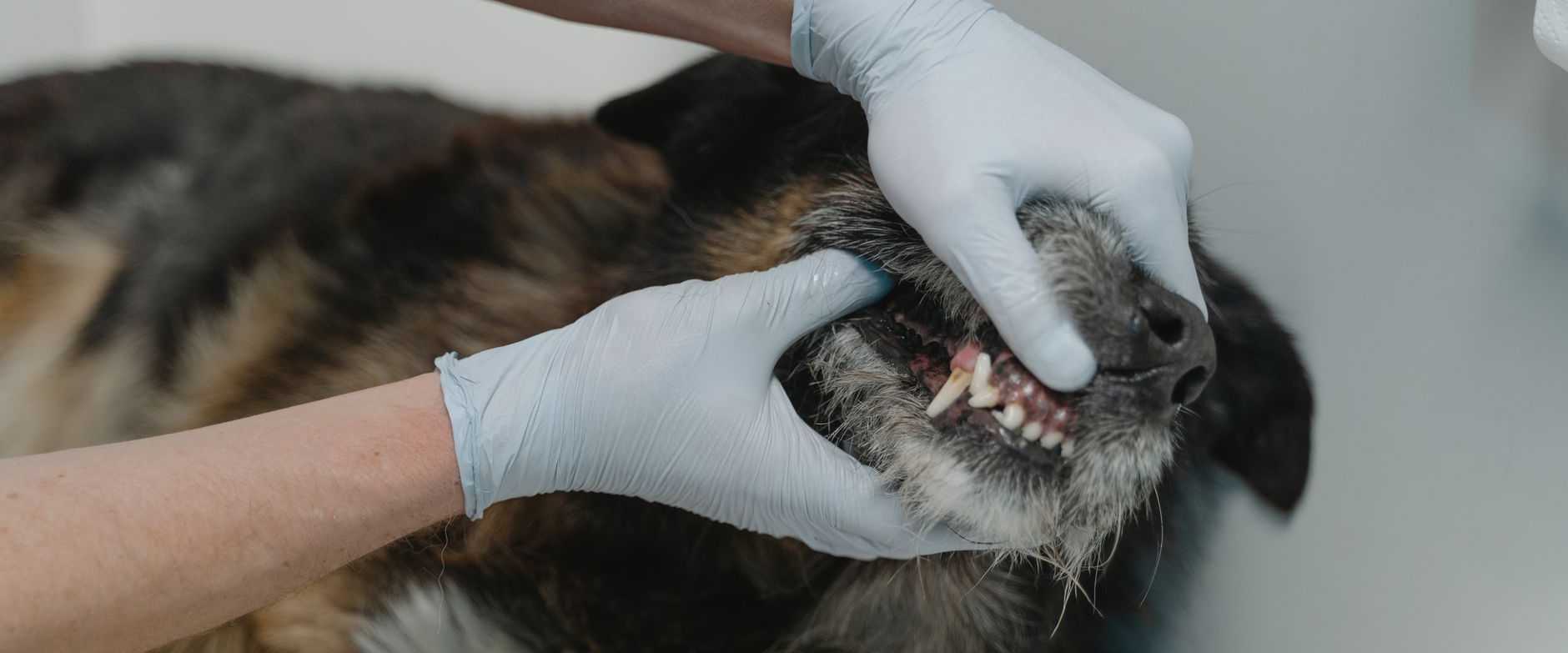
Wry Face
Wry face is a jaw misalignment where one side grows unevenly, causing crooked teeth and bite problems in dogs and cats.
Also known as Wry Bite, Maxillomandibular Asymmetry, Class IV Malocclusion
A wry face means the jaws don't line up properly: one side of the upper jaw, the lower jaw, or both has grown longer, shorter, or shifted compared with the other, so the muzzle looks slightly crooked and the teeth no longer meet the way they should. Veterinary dentists call this maxillomandibular asymmetry, or a class IV malocclusion, one of the four recognised categories of jaw and tooth misalignment. "Wry bite" is the older name still used by many breeders, though specialists tend to prefer the more precise term because it says which part of the jaw is out of line and in which direction. Something similar happens in horses, where a congenital sideways twist of the upper jaw and nose has its own name, wry nose.
Skeletal malocclusions like this are generally thought to run in certain breeds and family lines, the same way jaw-length problems tend to be inherited. Growth-plate injuries matter too: a knock to the face or jaw while a puppy or kitten is still growing can slow bone growth on the injured side while the other side keeps lengthening, and jaw and facial trauma in young, still-growing dogs is a recognised cause of lasting asymmetry.
Why it matters for your pet
The concern isn't how the face looks, it's where the teeth end up landing. When a bite is uneven, teeth get pushed into places they were never meant to touch: a canine can dig into the roof of the mouth, incisors can rub raw patches into gums or lips, and any tooth left without its normal opposing partner wears unevenly or traps food and plaque. Left unaddressed, that means ongoing sores, infection risk, and quiet pain rather than a cosmetic quirk. Worth a check-up if you notice:
- teeth that look crooked, or a jaw that appears off-centre
- sores, redness, or bleeding where a tooth is pressing into the palate, gum, or lip
- bad breath, or teeth that look unusually worn, chipped, or affected by gum disease
- a mouth that seems sore to touch, or is hard to examine while your pet is awake
Cats get this condition too, not just dogs. A vet will usually check the bite while your pet is awake, then again under anaesthesia with dental x-rays, since those show root position and jaw structure that simply can't be judged from the outside. Treatment aims at a comfortable, functional mouth rather than a tidy-looking one: options range from watching a mild asymmetry that isn't causing damage, to extracting the tooth doing the harm, shortening and sealing a crown, or gradually moving teeth with an orthodontic appliance. Puppies and kittens benefit from having their bite checked early, while baby teeth are still in place, since that's when problems are easiest to catch and sometimes correct before the adult teeth come through. Because a genetic component is suspected in many of these jaw-length problems, it's worth raising your pet's bite before making any breeding decisions. This is general information, not a diagnosis: a hands-on dental exam is the way to find out what your own pet's mouth actually needs.