Kleintierpraxis am Uhlenhorst
Practice in Uhlenhorst 8, 14532 Kleinmachnow, Germany
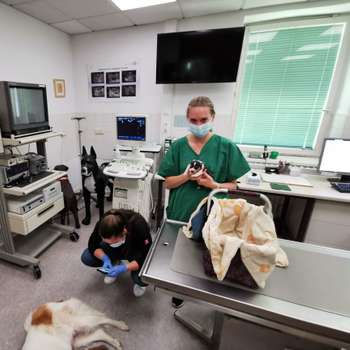
The Kleintierpraxis am Uhlenhorst in Kleinmachnow near Berlin cares for dogs, cats, and small pets – ranging from rabbits and guinea pigs to cage birds and reptiles. The practice is broadly equipped for diagnostics: cardiac ultrasound with color and tissue Doppler, X-ray, ECG, Holter ECG, blood pressure measurement, endoscopy, and an in-house laboratory are available alongside abdominal sonography. Surgeries are performed under isoflurane inhalation anesthesia with artificial ventilation and monitoring via pulse oximetry and ECG, supplemented by an X-ray system that accommodates even large dogs with short exposure times. For breeding and preventative care, the team offers cardiac examinations as well as hip, elbow, and spondylosis screenings in accordance with the guidelines of breeding associations.
Treated animals
Small Animals & Pets
- cats
- dogs
- ferrets
- guinea pigs
- rabbits
- small rodents
Reptiles & Amphibians
- lizards
- snakes
- turtles
Avian (Birds)
- pet birds
Medical focus areas and specializations
- anesthesia
- breeding support
- cardiology
- dentistry
- dermatology
- ECG
- endoscopy
- internal medicine
- neurology
- ophthalmology
- orthopedics
- parasitology
- surgery
- travel advice
- ultrasound
- vaccinations
- x-ray
Services
- LaboratoryOn-site blood, urine, and tissue analysis
Emergencies
Appointments & new clients
Spoken languages
- 🇩🇪 German
- 🇬🇧 English
- 🇫🇷 French
Payment methods
Contact
- Website
- Email
- Phone
- Fax
Practice location
Kleintierpraxis am Uhlenhorst
Practice location
Uhlenhorst 8
14532 Kleinmachnow
Germany
Team 18
Dr. Delia Fiderer
Practice Owner and Director
Dr. Petra Kattinger
Specialist Veterinarian for Small Animals
Dr. Volker Lammerschmidt
Practicing Veterinarian
Dr. Fabienne Lienhart
Practicing Veterinarian
Dr. Sabina Gustat
Practicing Veterinarian
Maximiliane Springer
Practicing Veterinarian
Finja Köth
Assistant Veterinarian
Anna Zimmer
Veterinary Nurse
Britta Cakir
Veterinary Nurse
Chantal Westhoff
Veterinary Nurse
Doreen Bause
Veterinary Nurse
Johanna Felsner
Veterinary Nurse
Christine Zugehör
Veterinary Nurse
Klaudia Sadlo
Veterinary Nurse
Nina Fackelday
Veterinary Nurse
Victoria Finnern
Veterinary Nurse
Celina Reimann
Veterinary Nurse
Sophie Merten
Veterinary Nurse
Reviews
They spontaneously helped me euthanize my beloved chicken, Hilda, after we had been turned away by many other veterinary practices – on the grounds that they only treated dogs and cats. Because it was urgent and Hilda had already suffered greatly, I am incredibly grateful for their willingness to help. The farewell was dignified; the veterinarian and her assistant were very compassionate and gave us the time and space we needed for that moment.
Frequently asked questions
This is possible at any time during consultation hours. However, patients with appointments are given priority; emergencies and life-threateningly ill animals are seen immediately, which may cause delays for scheduled appointments.
Yes. In addition to dogs and cats, the practice treats and operates on rabbits, guinea pigs, other small rodents, ferrets, cage birds, and reptiles. Blood draws, X-rays, cardiac and abdominal ultrasounds, ECGs, and procedures under inhalation anesthesia are also available for these animals.
As a rule, this includes a cardiac ultrasound with Doppler sonography, an ECG with limb leads, and two thoracic projections in the laterolateral and dorsoventral views. Blood pressure measurement and a 24-hour ECG are added if needed.
The practice recommends deworming dogs and free-roaming cats every three months with a broad-spectrum deworming product, and strictly indoor cats every six to twelve months. Whenever possible, all animals in a household should be treated at the same time to prevent mutual reinfection.
For dogs, the practice advises using a combination chewable tablet, administered year-round and repeated every four weeks. For cats, a spot-on product effective for three months or a monthly tablet is suitable; products approved only for dogs must never be used on cats.
The practice strives to avoid duplicate examinations and kindly asks you to bring along any findings already gathered. Once the examination is complete, the findings and proposed treatment are emailed to the referring practice, usually by the same evening; the animals are referred back there for ongoing treatment.
Yes, the transponder is placed under the skin on the left upper side of the neck without anesthesia and will not migrate. The practice handles the central registration of the chip number at no additional cost.
Veterinary practices nearby


Are you the owner or a team member of this practice? Claim this profile to manage it yourself.