Tierärztliche Praxis für Pferde Cathrin Möhring
Practice in Neuenfelde 6, 26931 Elsfleth, Germany
House calls across the Bremen (Hanseatic City), Oldenburg, Ganderkesee area
The veterinary practice for horses run by Cathrin Möhring in Elsfleth is entirely dedicated to equine dentistry. Cathrin Möhring travels out to the animals and works within a radius of around 120 kilometres around Elsfleth. Following an examination of the entire chewing apparatus, she carries out treatments under sedation and with the use of a speculum, which allows even the back teeth to be assessed and corrected under direct vision. Wave mouth, hooks and sharp edges, wolf teeth or deciduous teeth caps are all part of her remit, as is the treatment of periodontal pockets. In addition, she offers preventative healthcare including nutritional advice, saddle and bit checks, and blood tests.
Treated animals
Large & Farm Animals
- horses
Medical focus areas and specializations
- dentistry
- nutrition counseling
Appointments & new clients
Spoken languages
- 🇩🇪 German
Contact
- Website
- Email
- Phone
- WhatsApp
Practice location and mobile service area
Tierärztliche Praxis für Pferde Cathrin Möhring
Practice location
Neuenfelde 6
26931 Elsfleth
Germany
House calls
Bremen (Hanseatic City), Oldenburg, Ganderkesee
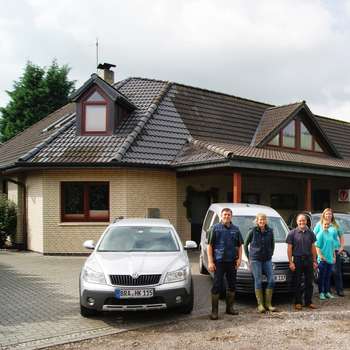
Team 1
Reviews
Frequently asked questions
For horses that have finished shedding their teeth and have an unremarkable bite, the practice recommends an annual check-up. Young horses from about 2.5 years of age should be checked every six months, because problems can arise even during the shedding phase.
As a rule, yes. Cathrin Möhring only treats horses without sedatives in exceptional cases, because working with a speculum without them causes a great deal of stress, and defensive movements impair both the care taken and the safety of everyone involved. The agents used take effect within a few minutes and are well tolerated.
What is needed is a firm, clean surface, a sheltered spot protected from the weather, as well as access to electricity and water.
Your horse's equine passport must be available for the initial treatment.
No feed should be given while the sedative is still taking effect, because the oesophagus is less active during this time and there is a risk of choke. After about two hours, most horses are lively again and allowed to eat.
Yes, worming treatments and blood tests are still possible. Worming treatments must be requested in advance, as they are only brought along to order.
Veterinary practices nearby

Are you the owner or a team member of this practice? Claim this profile to manage it yourself.