Tierärztliche Praxis Ruth Kosanetzky
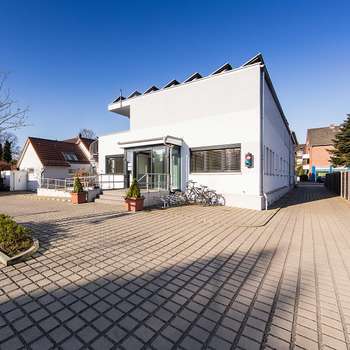
Practice in Reiherhagen 31, 22846 Norderstedt, Germany
House calls across the Hamburg, Norderstedt, Elmshorn area
At the Tierärztliche Praxis Ruth Kosanetzky in Norderstedt, everything revolves around equine dentistry. As a Certified Equine Dentist, Ruth Kosanetzky works according to IAED standards and brings cheek and incisors into even contact so that chewing pressure is distributed equally across all teeth. Because dental problems frequently lead to muscle tension and joint blockages, chiropractic training according to IAVC complements the treatment, alongside saddle checks and general equine medicine. With a fully equipped dental vehicle, she comes right to your stable, examines every single tooth, and discusses her findings thoroughly with owners. Every horse is sedated for treatment so that the oral cavity can be examined thoroughly and gently.
Treated animals
Small Animals & Pets
- dogs
Large & Farm Animals
- horses
Medical focus areas and specializations
- acupuncture
- chiropractic & osteopathy
- dentistry
- dermatology
- endoscopy
- general medicine
- nutrition counseling
- ophthalmology
- physiotherapy
- x-ray
Appointments & new clients
Spoken languages
- 🇩🇪 German
Payment methods
Contact
- Website
- Email
- Phone
Practice location and mobile service area
Tierärztliche Praxis Ruth Kosanetzky
Practice location
Reiherhagen 31
22846 Norderstedt
Germany
House calls
Hamburg, Norderstedt, Elmshorn
Team 1
Reviews
A fantastic and honest dentist who is very good with horses. Always reliable and I would recommend her to anyone! I've been seeing her for years and also as a chiropractor.
A highly competent equine dentist who always works in the horse's best interest. She is very organized, punctual, and reliable. I would recommend her without hesitation and have been using her for my horses (dental and chiropractic) for many years; I have always been extremely satisfied.
A very competent and friendly veterinarian. The appointment started on time and I received excellent advice. Her handling of my horse was truly gentle. We are thrilled and have finally found "our" veterinarian. Thank you!
I am incredibly grateful for the excellent treatment my 26-year-old gelding received. After several other veterinarians didn't even consider x-raying despite suspected EOTRH, she made the correct diagnosis and immediately developed the appropriate treatment plan. With great expertise and empathy, she extracted my horse's affected teeth—as gently as possible and with minimal sedation, which was very important to me given my horse's age. The changes are already impressive, and he is noticeably happier. A veterinarian who combines competence, thoroughness, and compassion—highly recommended!
I highly recommend Ruth Kosanetzky! 🫶 She has both a sensitive touch for each individual horse, as well as competence and reliability. And she explains everything to the owner thoroughly and patiently… I am extremely grateful that we found such a wonderful partner for our horse's dental health. ✨
Frequently asked questions
Yes, the treatment takes place right at your horse's home. Ruth Kosanetzky travels with a fully equipped dental vehicle. To ensure everything runs smoothly, you will need a quiet spot, a box with a bar or door to secure the horse, a non-slip surface, as well as electricity and water.
Yes, every horse is sedated for the treatment. This is the only way to examine the oral cavity thoroughly using a speculum, a bright light, and a probe, while reducing the risk of injury from defensive movements for the horse, owner, and veterinarian alike. The dosage depends on the cardiovascular condition, the estimated weight, and experience with the specific breed and type.
Every six months up to the age of five, as this is when horses go through the teething phase and wolf teeth should be removed. Between the ages of five and roughly 20, an annual check-up with correction is generally sufficient for a normal bite, while appointments every six months are recommended again from age 20 onwards. For misalignments, wave mouths, or step mouths, a shorter interval may be advisable.
The horse's equine passport and the signed data privacy statement. The horse may eat and drink normally, but no treats or hard bread, because these stick to the teeth and make the work more difficult. Depending on the weather, please have a cooler rug or a fly rug with fly protection ready.
The horse must not eat for one to two hours and should be monitored regularly until the effects wear off. In cold or damp-cold weather, a cooler rug provides protection, walking the horse in hand gets the circulation going, and mash or hay cobs make an ideal first meal. You should plan for a gap of about ten days before a tournament.
After a detailed discussion, the horse's movement is evaluated at the walk and trot on a straight line and on the lunge; the saddle, bridle, and teeth are also assessed along the way. Treatment is applied specifically to the blocked joints, supplemented by techniques such as dry needling and fascial therapy. Altogether, you can expect the appointment to take about 45 to 60 minutes.
Veterinary practices nearby

Are you the owner or a team member of this practice? Claim this profile to manage it yourself.