Swimmer's Ear in Dogs: Why Summer Swims Cause Ear Infections
A practical guide explaining why swimming triggers ear infections in dogs, which dogs are most at risk, how to dry and check ears properly, and when the signs mean it is time to call the vet.
- dogs
- dermatology
- general medicine
- Ear Infections
- Head Shaking
- Atopic Dermatitis
·
Key takeaways
- Let your dog shake her head first, then dry the ear flap and canal opening with a soft cloth
- Never insert cotton buds, bulb syringes or homemade vinegar rinses into the ear canal
- Check ears weekly during swim season for smell, discharge or redness
- Book a vet visit if head shaking or scratching lasts more than a day
- Treat the full course of prescribed drops and return for the recheck appointment
- Ask about underlying allergies or hormonal disease if infections keep recurring
Your dog spends an hour launching herself into the lake, has the best day of her life, and two days later she is shaking her head and rubbing her ear along the sofa. Swimmer's ear in dogs, or a dog ear infection after swimming, is one of the most common summer problems in practice, and one of the most preventable. Vets call it otitis externa: inflammation of the outer ear canal. This guide is for owners of water-loving dogs, especially the floppy-eared ones, and covers why swimming triggers ear infections, what the first signs look like, what you can safely do at home, and the point at which your dog needs a vet.
Why does swimming cause ear infections in dogs?
A dog's ear canal is not a straight tube like ours. It runs downwards first, then turns inwards towards the eardrum, forming an L shape, which means fluid does not drain easily out of the canal opening. Add body heat, a covering ear flap and hair inside the canal, and you have a warm, dark, humid pocket. Hairy canals and pendulous ear flaps both help trap heat and moisture, which is exactly what opportunistic microbes want.
The water itself is not really the villain. Swabs from perfectly healthy dog ears often contain small numbers of bacteria and yeast, including the yeast Malassezia pachydermatis, without causing any trouble at all. Persistent moisture softens and weakens the skin lining the canal, and once that barrier is disturbed, those normal residents can multiply out of control. Staphylococci and Malassezia are the usual suspects. In some dogs, especially those with a history of ear disease, Pseudomonas aeruginosa takes hold, and that organism thrives in damp places like soil and vegetation even though it is uncommon in a normal ear. Pseudomonas infections are painful and much harder to clear.
This is why the Merck Veterinary Manual lists excessive moisture in the ears, whether from the environment or from swimming, as a predisposing factor rather than a cause. It tips the balance in an ear that is already vulnerable. That distinction matters for you as an owner: if your dog gets an ear infection every summer, water is probably the trigger, but something else is likely making her ears susceptible in the first place.
Does it matter whether it is a pool, a lake or the sea?
Moisture is the main problem in all three, and heat and humidity make the canal a friendlier place for bacteria and yeast to grow. That effect shows up in the numbers: ear problems affect more than one in five dogs, and up to about half of dogs in warm, humid climates. Rinsing sand and silt off your dog after a swim and then drying the ears covers every kind of water she is likely to get into.
Which dogs get swimmer's ear most often?
Ear infections are common in dogs generally. A large UK study of over 22,000 dogs in first-opinion practice, run through the Royal Veterinary College's VetCompass programme, found that around 7 in 100 dogs were diagnosed with otitis externa in a single year. Breed and ear carriage were the strongest risk factors identified.
Compared with crossbreds, the same study found notably higher odds in Basset Hounds (nearly six times), Chinese Shar Pei, Labradoodles, Beagles and Golden Retrievers. Breeds with pendulous ears had about 1.76 times the odds of erect-eared breeds, and those with V-shaped drop ears about 1.84 times. Chihuahuas, Border Collies, Yorkshire Terriers and Jack Russell Terriers came out lower risk.
Your dog is more likely to run into trouble after swimming if she has:
- Heavy hanging ears or V-shaped drop ears that seal the canal opening
- A lot of hair inside or around the ear canal, which holds water like a sponge
- Narrow ear canals, or canals already thickened from past infections
- Allergic skin disease, which is the primary cause in 43% to 75% of dogs with otitis externa
- An underactive thyroid or another hormonal disease
- A history of ear infections, or a habit of swimming several times a week
Erect-eared breeds are not immune. And a Labrador is a swimmer with drop ears, which is a fairly unlucky combination in July.
What are the signs of swimmer's ear in a dog?
Acute otitis externa usually announces itself as a sudden increase in head shaking and scratching, often over a few days. Look for:
- Head shaking, often repeated and forceful
- Scratching at the ear, or rubbing the head along carpet and furniture
- A yellow, brown or waxy discharge, sometimes with visible pus
- A sweet, yeasty or foul smell from the ear
- Redness or swelling of the ear flap and canal opening
- Holding the head slightly tilted to the sore side
- Flinching, yelping or pulling away when you touch the ear or scratch the head
- Reluctance to open the mouth wide or chew properly
- Seeming less responsive to you, because a blocked canal muffles hearing
- A quiet, flat mood, or shying away from being petted on the head
Ear infections hurt. Dogs with a painful ear can become snappy when their head is approached, even dogs who are usually unflappable, so handle gently and warn children.
What should I do right after a swim?
Post-swim care takes about a minute per ear and prevents most of these infections.
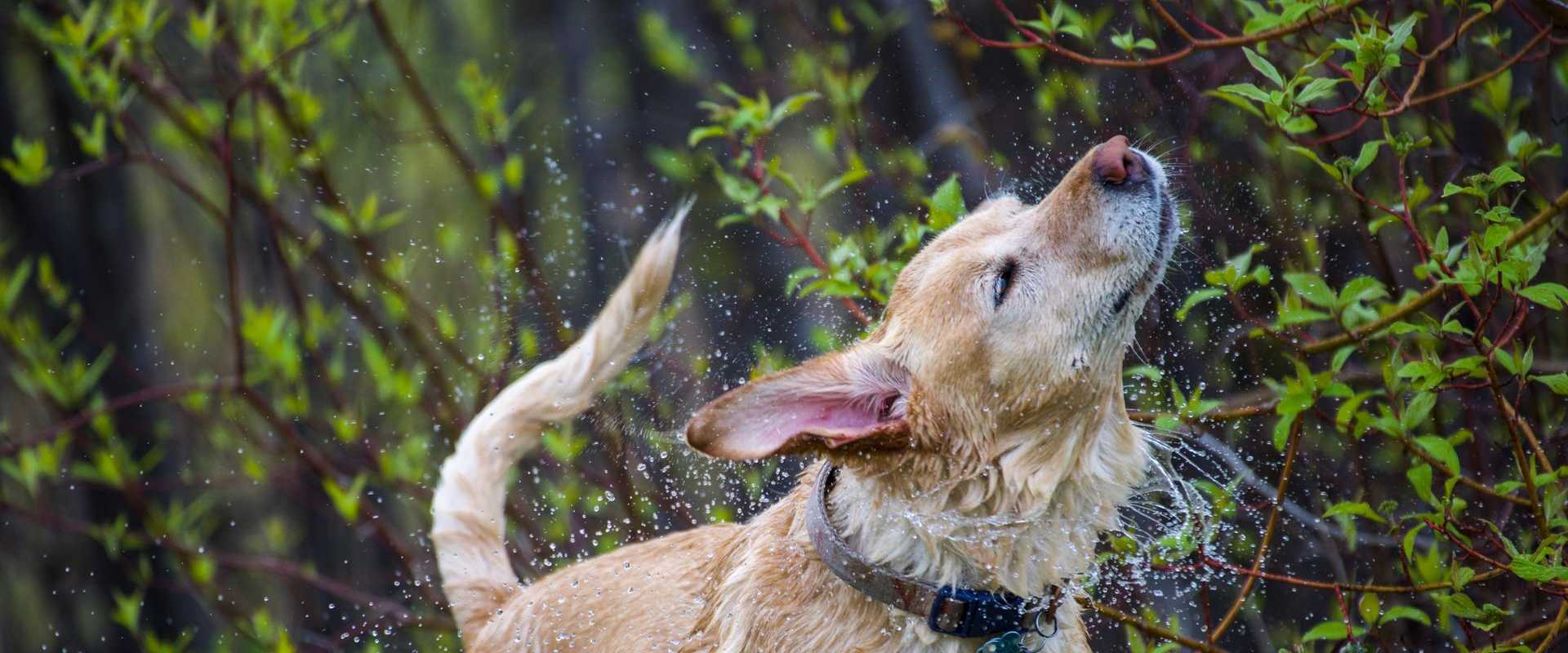
- Let her shake first: That reflex clears a surprising amount of water from the canal. Stand back and let it happen before you touch the ears.
- Dry what you can reach: Wipe the inside of the ear flap and the fur just below the canal opening with a soft cloth, gauze or absorbent pad. Only go where your finger fits comfortably. Never push anything down into the canal.
- Ask about a drying ear cleaner if your dog swims regularly: Veterinary ear cleaners differ in what they do, with some formulated to dry, some to disinfect and some to break down wax, so the choice should suit your individual dog. Your vet can pick one and show you the technique.
- Use it the way the clinic shows you: The usual method is to fill the canal, then gently massage the base of the ear from the outside to loosen debris, let your dog shake, and wipe away what comes up.
- Air the ears: Hold or gently fold the flaps back for a couple of minutes so air can reach the canal opening. Dry the fur behind and under the flap.
- Keep the hair in check: Trimming excess hair around the ear opening improves airflow. Pulling hair out of a healthy canal is not recommended, because the trauma itself can set off inflammation, so leave plucking as something only your vet advises for your particular dog.
- Check the ears once a week during swim season: Lift the flap, look, and have a sniff. You are looking for changes from your dog's normal, which is the whole point of knowing what normal looks like.
What not to do
- Skip the cotton buds: They push wax and water deeper and can injure the canal or eardrum. Trauma from cotton-tipped applicators and vigorous cleaning is itself a recognised route into ear disease.
- Do not flush with a bulb syringe or squeeze bottle: Push the nozzle in too far and it can seal the canal, and the pressure that builds can rupture the eardrum. Bulb syringes are best left to veterinary staff.
- No rubbing alcohol, hydrogen peroxide or homemade vinegar mixes: Preparations containing alcohol, or with a very low pH, can irritate an already inflamed or ulcerated canal. And if you cannot see the eardrum, you cannot know it is intact, which matters because some chemicals put into the ear can reach the middle ear and do damage there.
- Do not overclean: Cleaning too often is a recognised way to keep an ear inflamed. Even for maintenance after a treated infection, cleaning is typically every 7 to 14 days as needed, not daily.
- Never reuse leftover medicated drops: Last summer's prescription may be aimed at the wrong organism, and using it can mask signs, encourage resistance, or harm an ear whose eardrum has since ruptured.
When should I call the vet?
Book an appointment if your dog is shaking or scratching her ear for more than a day, if you can see discharge or redness, or if the ear smells. Early otitis is straightforward to treat. Left for a week or two it becomes painful, deeper and much more stubborn, and repeated episodes drive changes in the canal such as thickening and narrowing. Some of those early changes can be reversed with anti-inflammatory treatment, but once the cartilage mineralises, that is permanent, which is exactly why early treatment is worth the appointment.
Contact a vet the same day, or an emergency clinic out of hours, if you see any of these red flags:
- A head tilt that persists, stumbling, circling, or falling to one side
- Rapid flicking eye movements, or a drooping face or lip on one side
- Sudden apparent deafness
- Blood in the ear discharge, or a badly swollen, closed-over canal
- Crying out when the ear is touched, or refusing food and hiding
- A ballooning, fluid-filled swelling of the ear flap, which can follow violent head shaking
Those signs point towards the middle or inner ear, or a ruptured eardrum, and they change both the treatment and the urgency.
What will the vet do, and how do I stop it happening again?
Expect your vet to look down the canal with an otoscope and check whether the eardrum is intact. Most will take a swab and examine it under the microscope, because bacteria and yeast need different medications, and infections cannot reliably be told apart by the smell or appearance of the discharge. Practice varies on when a sample is sent for culture: it is more likely if rod-shaped bacteria such as Pseudomonas show up, if the ear has not responded to treatment, or if the problem keeps coming back. Very sore or debris-packed ears sometimes need sedation before they can be examined and flushed properly.
Treatment usually means a thorough clean, then topical drops, gel or ointment, often combined with an anti-inflammatory to settle pain and swelling. Two things make the difference between a cure and a rerun: using the medication exactly as prescribed for the full course, even once your dog seems comfortable, and going back for the recheck a couple of weeks in so your vet can confirm the ear has genuinely cleared rather than just quietened down.
If ear infections keep coming back, ask about the underlying cause rather than treating each flare-up in isolation. Otitis tends to return after topical treatment when the driver, most often allergy, has not been dealt with. In practice that means investigating allergic skin disease, food reactions, hormonal conditions such as hypothyroidism, or the shape of the canal itself. If only one ear is affected, it is also worth ruling out a foreign body: a grass seed in the ear canal is a classic summer cause and resolves fast once it is removed.
Most water-loving dogs can carry on swimming. Keep her out of the water while an ear is being treated, since moisture is one of the things stacking the odds against that ear, then return to the drying routine once she is cleared and keep checking weekly through the summer. If she gets an infection after every single swim despite good aftercare, that is a conversation about her underlying skin health, not a reason to give up the lake for good.
The short version
Swimming does not have to cost your dog her ears. Dry them, air them, look at them once a week, and treat head shaking that lasts more than a day as a reason to ring your vet rather than something to watch a little longer. The infections that become miserable, long and expensive are almost always the ones that were left alone at the start.