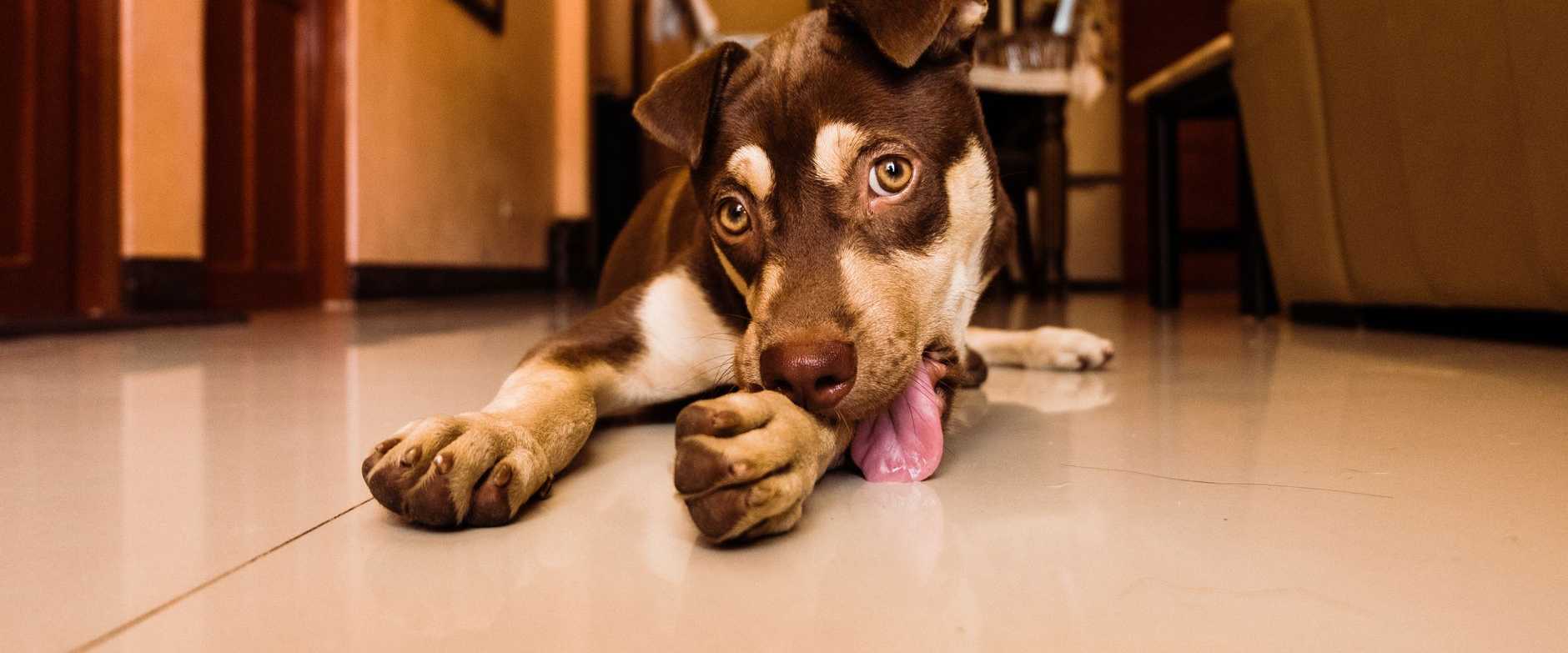
Dog Itching Constantly and Licking Paws: Causes and Relief
Why a dog itches constantly and licks its paws, from fleas, mites and infections to environmental and food allergies, plus home care and when to see a vet.
- dogs
- dermatology
- allergology
- parasitology
- nutrition counseling
- general medicine
- Atopic Dermatitis
- Flea Allergy Dermatitis
- Mange
- Demodicosis
- Foxtails / Grass Seeds
·
Key takeaways
- Itching is a symptom, so the cause needs finding: parasites, infections, allergies or a mix
- Start with year-round vet-prescribed flea control for every pet in the home
- Check between the toes for redness, brown staining, lumps or lodged seeds
- Food allergy needs a strict 8-week elimination diet, with no treats or scraps
- Keep an itch diary of timing, body areas, diet and seasons for your vet
- Book a visit if itching lasts more than a few days or there are open wounds, limping or swelling
If your dog is itching constantly and licking their paws, you are probably hearing it at night too: the scratching, the nibbling, the wet slurp of a tongue working between the toes. This guide is for owners who want to understand what is behind it, what you can do today, and when a vet visit should not wait. Itching is a symptom, not a diagnosis. With a methodical approach, most dogs can be made a great deal more comfortable.
Why is my dog itching constantly and licking its paws?
Veterinary dermatologists group the common causes of itch in dogs into three main categories:
- Parasites: fleas, ticks and mites
- Infections: bacteria, yeast or fungi
- Allergies: to things in the environment, to food, or both
Less common causes exist, including some autoimmune diseases and skin cancers, so a dog who does not fit the usual picture needs a closer look.
Often more than one of these is going on at once. An allergic dog may also have fleas and a yeast infection on top. Each problem adds its own share of itch, which is why fixing one cause can bring partial relief without stopping the scratching altogether.
Could parasites be making my dog itch?
Vets usually look for parasites first. They are common, they are treatable, and they can mimic everything else.
Fleas and flea allergy
Some dogs react to proteins in flea saliva, so even a few bites can set off intense itching. In dogs with flea allergy, the itch and the small crusty bumps typically cluster on the lower back, around the base of the tail and on the back and inner thighs. Hair in those areas often thins from all the licking and chewing.
Not seeing fleas does not rule them out. An itchy dog grooms so hard that adult fleas get removed, and indoors fleas can survive in low numbers all year. Good flea control means three things:
- Treat the itchy dog
- Treat every other pet in the home
- Deal with the home itself, because much of the flea life cycle happens off the animal
The guide to breaking the flea life cycle explains how this works in the home. It is written for cats, but the household principles are the same. Most vets recommend year-round, vet-prescribed flea prevention for itchy and allergic dogs.
Sarcoptic mange (scabies)
This mite causes some of the most intense itching a dog can have. Cornell's veterinary college describes the typical pattern: red, crusty, hairless skin on the edges of the ears, the elbows and the hocks (the ankle joints of the back legs). Dogs pick it up from other dogs or from shared places such as kennels, grooming salons and dog parks.
Some practical points:
- Skin scrapings often miss the mites, so a vet may treat on suspicion alone.
- All dogs in the household need treatment, even ones that look fine.
- Most dogs improve within about two weeks. Full recovery can take 6 to 8 weeks.
- People can catch it too and develop an itchy rash. It usually settles once the dogs are treated, but see your own doctor if you develop symptoms.
Demodex mites
These mites normally live in hair follicles in small numbers. They can multiply when a dog's immune system is weakened. When the paws are affected, demodicosis should be the first thing ruled out, because it can look very like allergy. A simple skin test at the clinic usually tells them apart.
Is my dog's paw licking caused by allergies?
Allergies are the other big group. They are lifelong conditions that can be controlled but not cured.
Environmental allergies (atopic dermatitis)
Atopic dermatitis is an inherited tendency to react to everyday substances such as pollens and house dust mites. According to the Merck Veterinary Manual, signs usually start between 6 months and 3 years of age. The paws, face, ears and skin folds are typical itch zones.
It can be seasonal, all year round, or all year with seasonal flare-ups. Breeds listed as predisposed include:
- Labrador and Golden Retrievers
- Boxers and Boston Terriers
- West Highland White, Scottish and Wire Fox Terriers
- Shih Tzus and Lhasa Apsos
- Shar-Peis and Dalmatians
The condition tends to worsen over time, so getting it under control early gives your dog a better quality of life. In white-coated dogs, constant licking often leaves reddish-brown saliva staining on the paws.
Food allergy
Food allergy looks almost identical to environmental allergy on the skin. It can also cause recurring ear or skin infections, and sometimes vomiting or diarrhoea. A dog with no stomach upset can still have a food allergy.
There is no shortcut test. Blood, saliva and hair tests for food allergy are inaccurate and can lead to a wrong diagnosis. The only reliable method is a strict elimination diet trial:
- Your vet chooses a prescription diet, either one with novel ingredients your dog has never eaten or a hydrolysed one, where the protein is broken into pieces too small for the immune system to recognise. A home-cooked diet designed by a veterinary nutritionist is another option.
- Your dog eats nothing else for about 8 weeks. That rules out treats, chews, table scraps and flavoured medicines.
- If the itch clearly improves, the old food is reintroduced. If the itch returns, usually within 7 to 14 days, food allergy is confirmed.
Ordinary shop-bought diets, even those labelled for sensitive skin, are not suitable for a proper food trial. One stolen biscuit can spoil weeks of effort, so everyone in the household needs to be on board. In dogs, the foods most often confirmed as triggers are beef, dairy, chicken, wheat and lamb.
Why the paws in particular?
Inflamed paws, which vets call pododermatitis, are very common and have a long list of possible causes. Besides allergies and mites, these include:
- Yeast overgrowth: look for greasy skin between the pads and rusty-brown staining at the base of the nails.
- Foreign bodies: grass awns or splinters lodged between the toes. Our guide on grass seeds in paws covers how to check for them.
- Contact allergy: a reaction to something the feet touch. Vets say this is often overlooked.
- Interdigital cysts: painful lumps between the toes, sometimes with a draining hole. They often follow friction from foot shape, arthritis or long-standing allergies.
- Joint pain or limb problems: these change how a dog bears weight and can feed into paw trouble.
Some dogs lick a sore foot because it hurts rather than itches. Limping alongside licking points towards pain, injury or a deeper paw problem.
How do secondary infections make the itching worse?
Allergic, inflamed skin is easy territory for bacteria and yeast. These infections add their own itch, so a dog can stay uncomfortable even when the original trigger is under control. Treating infections is usually part of the first visit. Medicated shampoos are often included, and some dogs need repeated courses.
What will the vet do?
Expect a step-by-step workup rather than one test. The AAHA allergy guidelines outline a typical sequence:
- A detailed history and a full skin and ear exam, including the paws, claws and skin folds, plus flea combing.
- Simple clinic tests: skin scrapings for mites, and tape or impression samples looked at under the microscope for bacteria and yeast.
- Relief from the itch straight away, so your dog is comfortable while the cause is found.
- Treatment of infections and parasites, with a reliable flea preventive.
- A recheck about 14 days later to see what helped.
- A diet trial if the itch persists.
Environmental allergy is diagnosed by ruling out everything else. Allergy skin or blood tests do not diagnose it. They are used afterwards to choose ingredients for allergy immunotherapy, sometimes called an allergy vaccine.
How can I get my dog relief from the itching?
Treatments your vet may offer
Several options exist, and they work at different speeds. AAHA's guidance on flare and long-term therapies summarises them:
- Fast-acting anti-itch tablets: can work within hours, but some are not suitable for young puppies or dogs with certain other illnesses.
- Anti-itch injections: given at the clinic and repeated every few weeks. They start working within hours to about 3 days and are considered safe for puppies and dogs with other health problems.
- Steroids: act quickly, but side effects such as increased thirst, hunger and panting are common, so vets use them carefully.
- Immune-modulating medication: used for long-term control. It takes weeks to work and needs periodic blood monitoring.
- Allergen immunotherapy: the only option that changes the immune response itself, but it can take months to a year to show its full effect.
- Essential fatty acids: may help reduce the need for other drugs, but take weeks to months.
- Antihistamines: side effects are uncommon, but they may only help mildly itchy dogs.
Your vet will match these to your dog's age, health and diagnosis. Please check with them before giving any medicine, supplement or human product at home.
What you can do at home
- Keep a diary: note when the itch is worse, which body areas are affected, what your dog eats, and any recent changes. Seasonality and response to past treatments are some of the most useful clues for your vet.
- Stay on top of parasite control: use vet-recommended flea prevention for every dog and cat in the home, all year.
- Check the paws: look between the toes for redness, swelling, brown staining, lumps or anything lodged there.
- Hold off on random diet changes: switching foods without a plan muddies the picture before a proper trial.
- Finish every course: stopping antibiotics, anti-yeast treatments or shampoo routines early is a common reason infections come back.
- Follow the recheck plan: stopping one medication at a time helps show which one is actually working.
When should I call the vet about my itchy dog?
Book a vet appointment if the itching lasts more than a few days, keeps your dog (or you) awake, or keeps coming back. Seek prompt attention if you notice any of these red flags:
- Open wounds, bleeding or raw skin from scratching or chewing
- Limping, or a dog who will not put weight on a paw
- Swelling, lumps or draining holes between the toes
- A bad smell, pus or greasy discharge from skin, paws or ears
- Sudden, intense itching with crusts on the ear edges, elbows or hocks, especially if another dog in the home is itchy or people in the house develop a rash
- Lethargy, loss of appetite or weight loss alongside the skin problem
- Hives or facial swelling after a new medication or injection
If your dog is already on treatment and the itch is not improving within the timeframe your vet gave you, call them. A different cause, an unrecognised infection or a missed parasite may be in play.
What does long-term management look like?
Allergic dogs usually need lifelong care, with good spells and flare-ups. The goal is control, not cure. A typical plan combines flea prevention, prompt treatment of infections, skin care and the itch treatment that suits your dog best. Regular contact with your vet team makes a real difference, and so does reporting flare-ups early rather than waiting until the skin is badly damaged.
Takeaway
A dog who itches constantly and licks their paws is uncomfortable, not misbehaving. The usual culprits are parasites, infections and allergies, often several at once. Start with strict flea control and a vet visit, expect a step-by-step workup, and be patient through tests and diet trials. With the right diagnosis, most itchy dogs can get real, lasting relief.