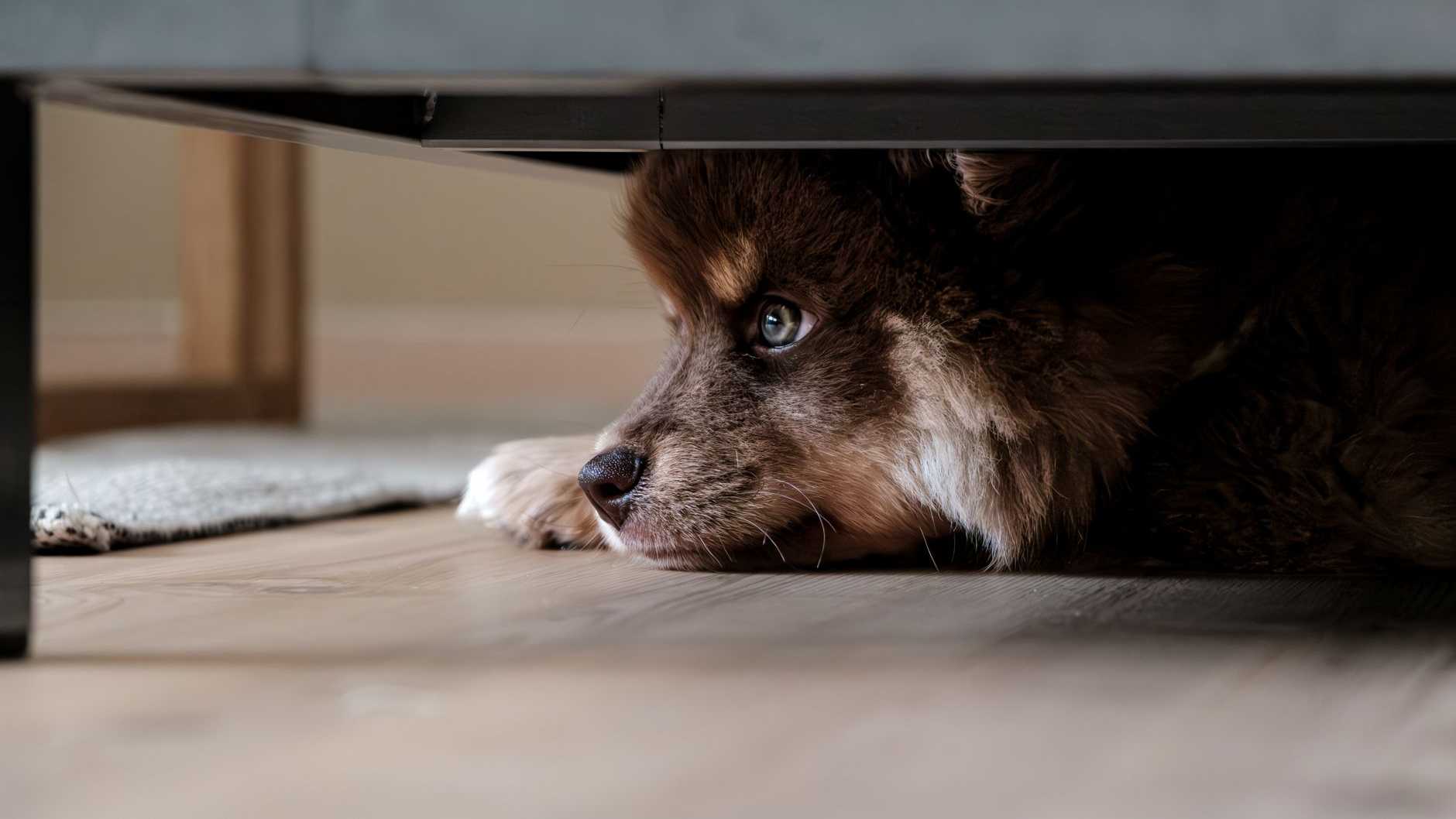
Noise Phobia
A genuine anxiety condition in dogs and cats triggered by loud sounds like thunder or fireworks, ranging from mild fear to panic-level distress.
Also known as Noise Aversion, Fear of Loud Noises, Sound Phobia, Fireworks Phobia, Thunderstorm Phobia
Loud, sudden sounds like thunder, fireworks, gunshots or even a slammed door can trigger real fear in dogs and cats, and for some pets that fear goes well beyond a brief startle. Veterinary behaviourists describe noise phobia (sometimes called noise aversion) as a genuine anxiety condition, not just a quirky habit, because the physical response mirrors a panic attack: racing heart, dilated pupils, and a body flooded with stress hormones. Studies suggest it's remarkably common, with estimates ranging from roughly a third to over half of dogs showing some degree of noise sensitivity.
The signs can be easy to miss if you don't know what to look for. Some pets pace, pant, drool, tremble or try to hide. Others become almost frozen and unresponsive, which owners sometimes mistake for calm when it's actually the opposite. The Cornell College of Veterinary Medicine notes that signs of fear can range from mild to severe, including trembling, vocalizing, panting, pacing, drooling, hiding, digging at doors and escape attempts. In more severe cases, pets may bolt in a desperate attempt to get away from the sound, which is why animal shelters consistently see a spike in lost pets around fireworks holidays.
What makes noise phobia worth taking seriously is that it rarely stays the same or fades on its own. The BSAVA points out that a fearful response to abnormally loud sounds may be normal or may become a phobia, and while some fear responses decrease with repeated exposure, a significant proportion of animals become sensitised so the reaction actually grows stronger over time. Left unaddressed, a mild flinch at fireworks can gradually turn into a dog who panics at thunder, car doors, or even the vacuum cleaner.
The reassuring part is that this is one of the more manageable behavioural conditions in veterinary medicine. Vets typically build a plan around a few pillars: giving your pet a safe, den-like space to retreat to, using background noise or music to soften sudden sounds, gradual desensitisation training that pairs low-level recordings of the trigger with rewards, and in more significant cases, short-term or daily anti-anxiety medication prescribed by a vet. As Cornell's behaviour team puts it, prevention is far easier than trying to reverse a fear response once it has taken hold, which is why acting on early signs rather than waiting matters.
If your pet freezes, shakes, hides, or tries to escape during storms, fireworks, or other loud events, it's worth raising with your vet rather than assuming they'll simply grow out of it. A proper behavioural assessment can rule out other causes and match your pet with the right combination of management, training, and medication for their specific triggers and severity.