Klinik für Wiederkäuer
Practice in Sonnenstraße 16, 85764 Oberschleißheim, Germany
House calls across the Munich, Freising, Fürstenfeldbruck area
- Hospitalisations and externships for international students are currently not possible for legal reasons; the clinic cannot offer these opportunities at the moment.
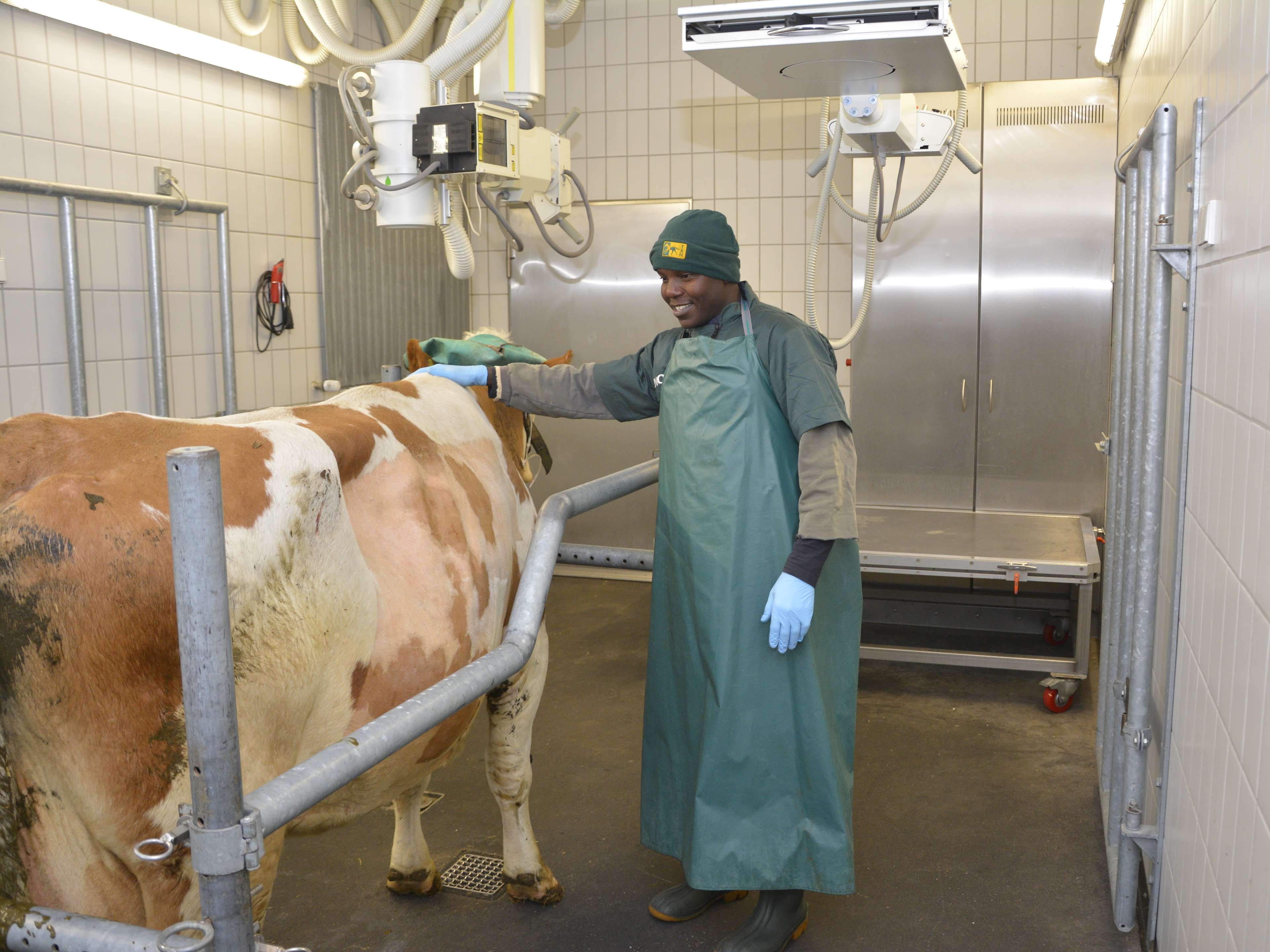
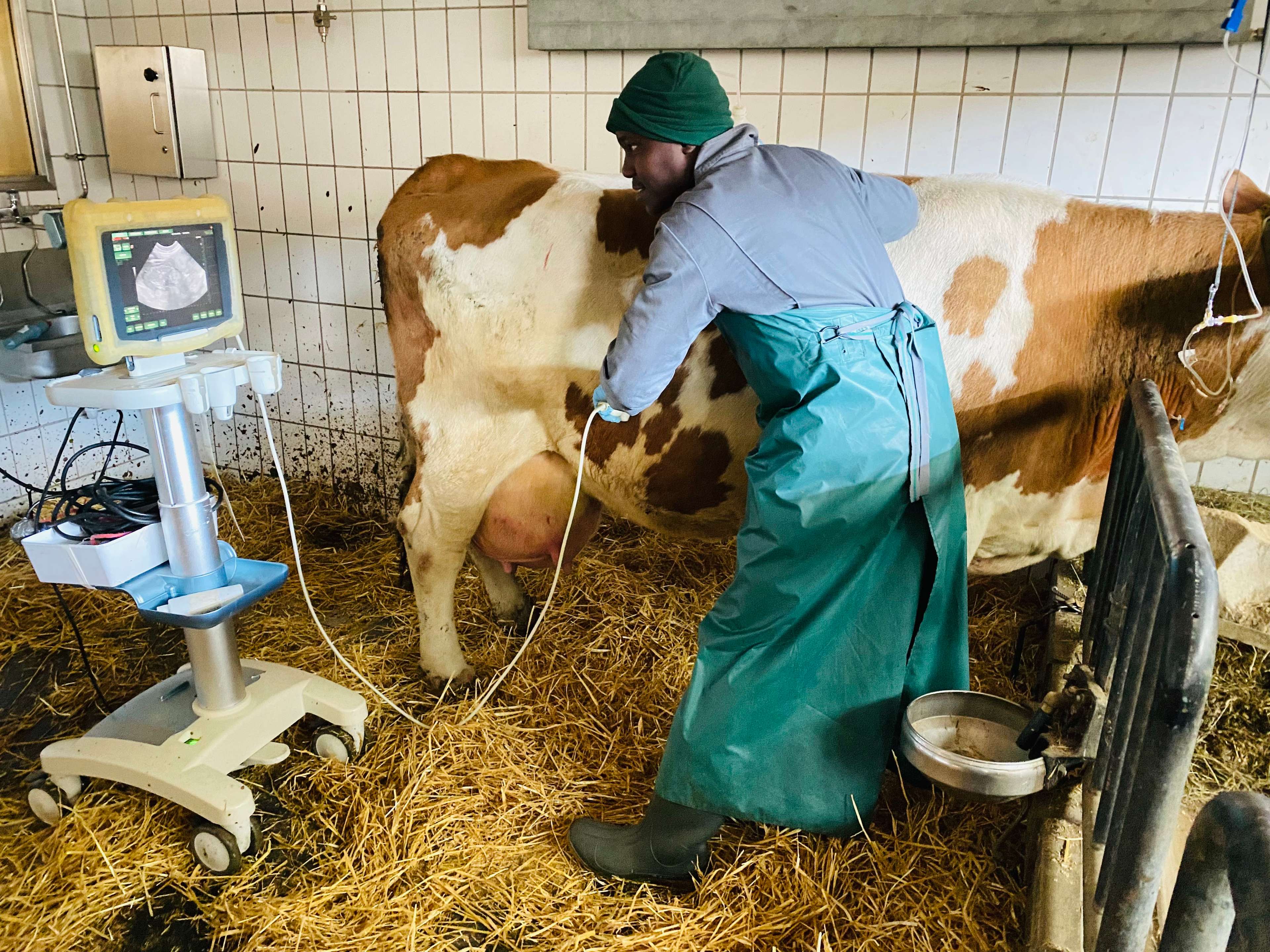
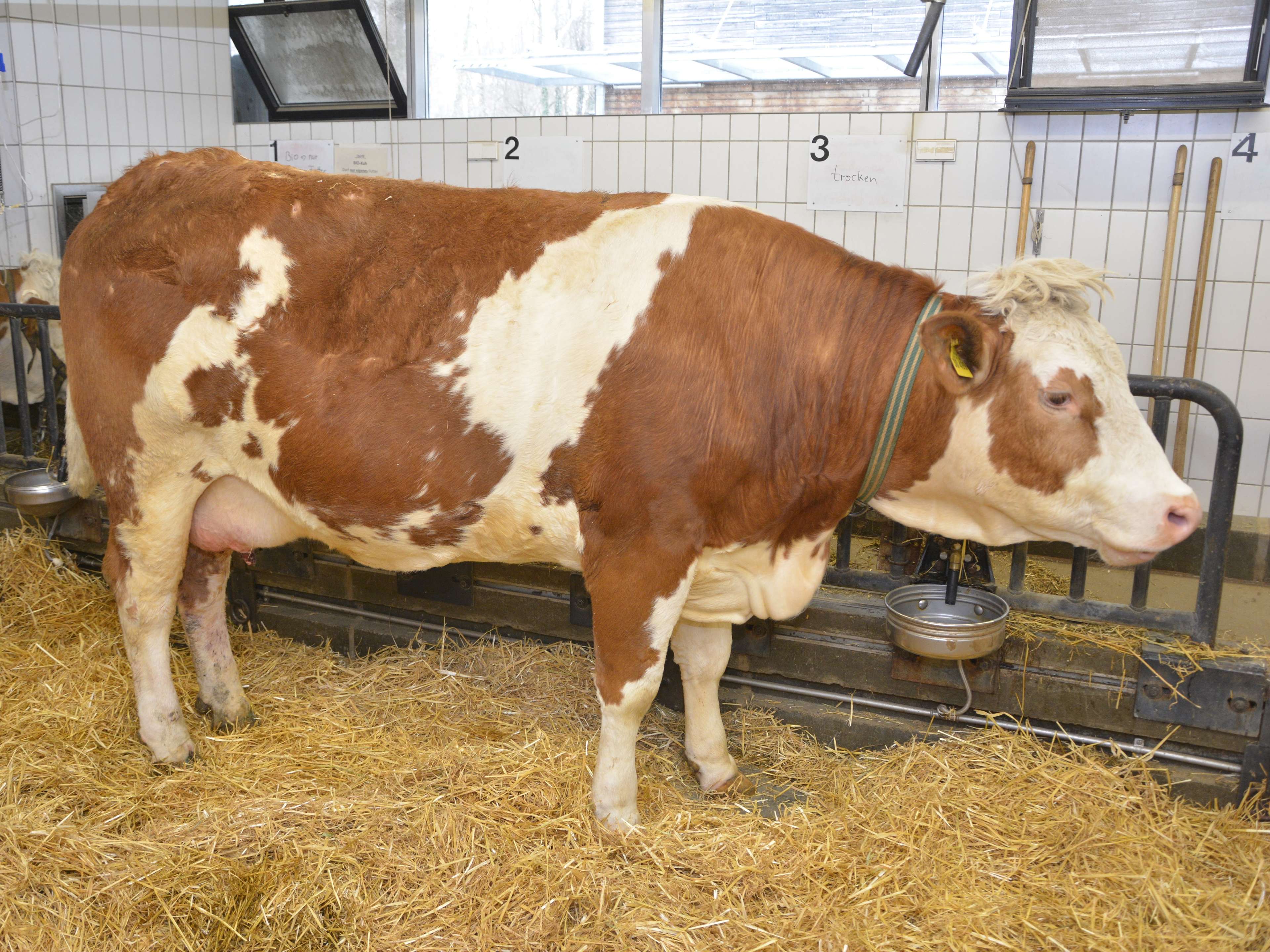
The Ruminant Clinic at LMU Munich cares for cattle, calves, sheep, goats, llamas, and alpacas—both in-house at our referral clinic and on-site at regional farms via our ambulatory service. We cover internal medicine, soft tissue surgery, orthopaedics including claw and fracture care, and reproductive medicine ranging from obstetrics to udder diagnostics. Critically ill calves receive intensive care, and a phone call is required prior to any admission. Veterinary students accompany us during examinations, surgeries, and farm visits, while the treatment is always handled by the veterinary team.
Treated animals
Large & Farm Animals
- camelids
- cattle
- goats
- sheep
Medical focus areas and specializations
- anesthesia
- dentistry
- endoscopy
- gynecology
- internal medicine
- ophthalmology
- orthopedics
- surgery
- ultrasound
- x-ray
Services
- HospitalizationOvernight or multi-day monitoring and care
- LaboratoryOn-site blood, urine, and tissue analysis
Emergencies
Appointments & new clients
Spoken languages
- 🇩🇪 German
Contact
- Website
- Email
- Phone
Practice location and mobile service area
Klinik für Wiederkäuer
Practice location
Sonnenstraße 16
85764 Oberschleißheim
Germany
House calls
Munich, Freising, Fürstenfeldbruck
Team 44
Prof. Dr. Michael Iwersen
Head of Clinic; Chair of Herd Health Management and Animal Welfare
Prof. Dr. Gabriela Knubben-Schweizer
Head of Clinic; Chair of Internal Medicine and Surgery of Ruminants; LMU Women's Representative
Prof. Dr. Florian Trefz
Visiting Professor for Internal Medicine and Surgery of Ruminants
Prof. Dr. Holm Zerbe
Head of Clinic; Managing Director; Chair of Physiology and Pathology of Reproduction; Director of the Center for Clinical Veterinary Medicine
Dr. Melanie Feist
Senior Physician, Orthopaedics Focus
Dr. Corinna Hübner-Lausch
Deputy Head of Ambulatory Service and Herd Health
Dr. Annette Lorch
Senior Physician, Young Animal Diseases Focus
Dr. Rainer Martin
Head of Ambulatory Service and Herd Health
PD Dr. Wolfram Petzl
Lead Senior Physician
Dr. Annette Pfitzner
Head of Clinical Services, Internal Medicine and Surgery Focus
Dr. Oliver Stadler
Senior Physician for Teaching, Research, and Information Technology
Dr. Katja Voigt
Lead Senior Physician for Small Ruminants and South American Camelids
Dr. Frank Weber
Head of Central Laboratory for Large Animals
Dr. Christoph Wenzel
Senior Physician
Charlotte Ahrens
Resident in Cattle Medicine
Dr. Viktoria Balasopoulou
Veterinarian
Frederik Beermann
Resident in Small Ruminant and Camelid Medicine
Lisa-Marie Böhm
Veterinarian
Chiara Geiger
Veterinarian
Dr. Stine Giertzuch
Resident in Cattle Medicine and ITB/QS Cattle
Theresa Hoffmann
Veterinarian
Lisa Huber
Resident in Cattle Medicine
Dr. Simone Knoch
Resident in Cattle Medicine
Dr. Marie Meyerholz-Wohllebe
Veterinarian
Jakob Neidlinger
Veterinarian
Sandra Ott
Resident in Cattle Medicine
Elisabeth Pernpeintner
Resident in Cattle Medicine
Dr. Eva Petzl
Veterinarian
Alicia Pichlmeier
Resident in Cattle Medicine
Dr. Eva Schade-Weskott
Veterinarian
Dr. Irene Schairer
Resident in Cattle Medicine
Dr. Victoria Schneider
Resident in Reproductive Medicine
Mara Theisges
Resident in Cattle Medicine
PD Dr. Theresa Tschoner-Utza
Veterinarian
Dr. (PhD) Yury Zablotski
Research Associate
Kati Döring
Secretary, Zerbe Chair
Catherina Oellbrunner
Secretary, Knubben Chair
Susanne Thubauville
Secretary, Knubben Chair
Alexandra Asche
Biological-Technical Assistant, Central Laboratory for Large Animals
Sandra Haug
Deputy Head of Laboratory, Central Laboratory for Large Animals
Doris Kronthaler
Medical Technologist for Veterinary Medicine, Central Laboratory for Large Animals
Beatrix Limmer
Medical Technologist, Central Laboratory for Large Animals
Evgenija Stojanova
Medical Technologist for Veterinary Medicine, Central Laboratory for Large Animals
Maerill Wagner
Veterinary Assistant, Central Laboratory for Large Animals
Reviews
I had the impression that a lot of care was taken with the diagnosis and treatment. But I'm a layperson. Unfortunately, we then had to have our dog euthanized. The process and the aftermath could be handled with a bit more sensitivity, but you also have to understand that this was an exceptional situation for us, while for the nursing staff and doctors it's just everyday life.
I can only speak from the perspective of a print delivery service. The facility is impeccably maintained, and the security service is flawless. Unfortunately, this isn't the case everywhere in Munich...
Yesterday at 9:35 pm, we took a billy goat with kidney stones to the specialist department. The team was incredibly friendly. The vet took the time to explain everything and even told us about the potential costs beforehand. Several female students were also there to help. A fantastic team who were able to help Bertl. We hope he makes a full recovery.
We were seen very quickly as an emergency case with our sheep Flöckchen and treated with exceptional kindness and empathy. Even though Flöckchen didn't survive the surgery and subsequent treatment, it wasn't due to any lack of selfless and loving care, but simply because it was too late. I would entrust any of my sheep, and myself, to them for treatment without hesitation! It's fantastic, competent medical care delivered with so much heart!
Excellent clinic for small and large ruminants. They also treat alpacas and llamas. A great team of veterinarians and animal caretakers.
Frequently asked questions
Yes. Please register your animal by phone at 089/2180-78800 prior to any admission, even if the animal is coming in as an emergency.
The farm of origin must be free of BHV-1 and BVD suspicion, no Q fever must have been detected there in the past twelve months, and calves must be tagged. Cattle from pure fattening farms are not accepted at present; further details will be discussed when you register.
No, wild ruminants cannot be admitted to the clinic.
Yes, small ruminants and camelids are cared for both as inpatients and on farms, including pregnancy checks via ultrasound. We provide isolated housing for animals from Maedi- or CAE-free herds.
The ambulatory service area covers regions east to south of Munich with a travel time of no more than 45 minutes from the clinic. Visits are arranged only after consultation with your regular farm veterinarian; for sheep, goats, llamas, and alpacas, you can call 089/2180-78950 to check if your farm is within the service area.
Yes, herd health investigations for problem farms are available throughout Bavaria, usually in cooperation with your regular farm veterinarian. The focus is on identifying issues related to feeding, housing, and management.
Veterinary practices nearby


Are you the owner or a team member of this practice? Claim this profile to manage it yourself.