Tierarztpraxis Brentgens
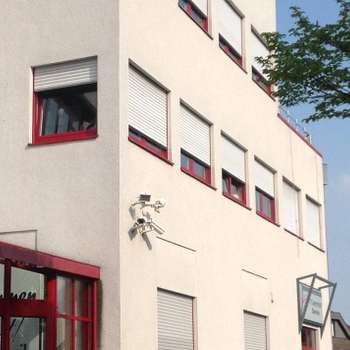
Practice in Hasenfelder Straße 10, 52428 Jülich, Germany
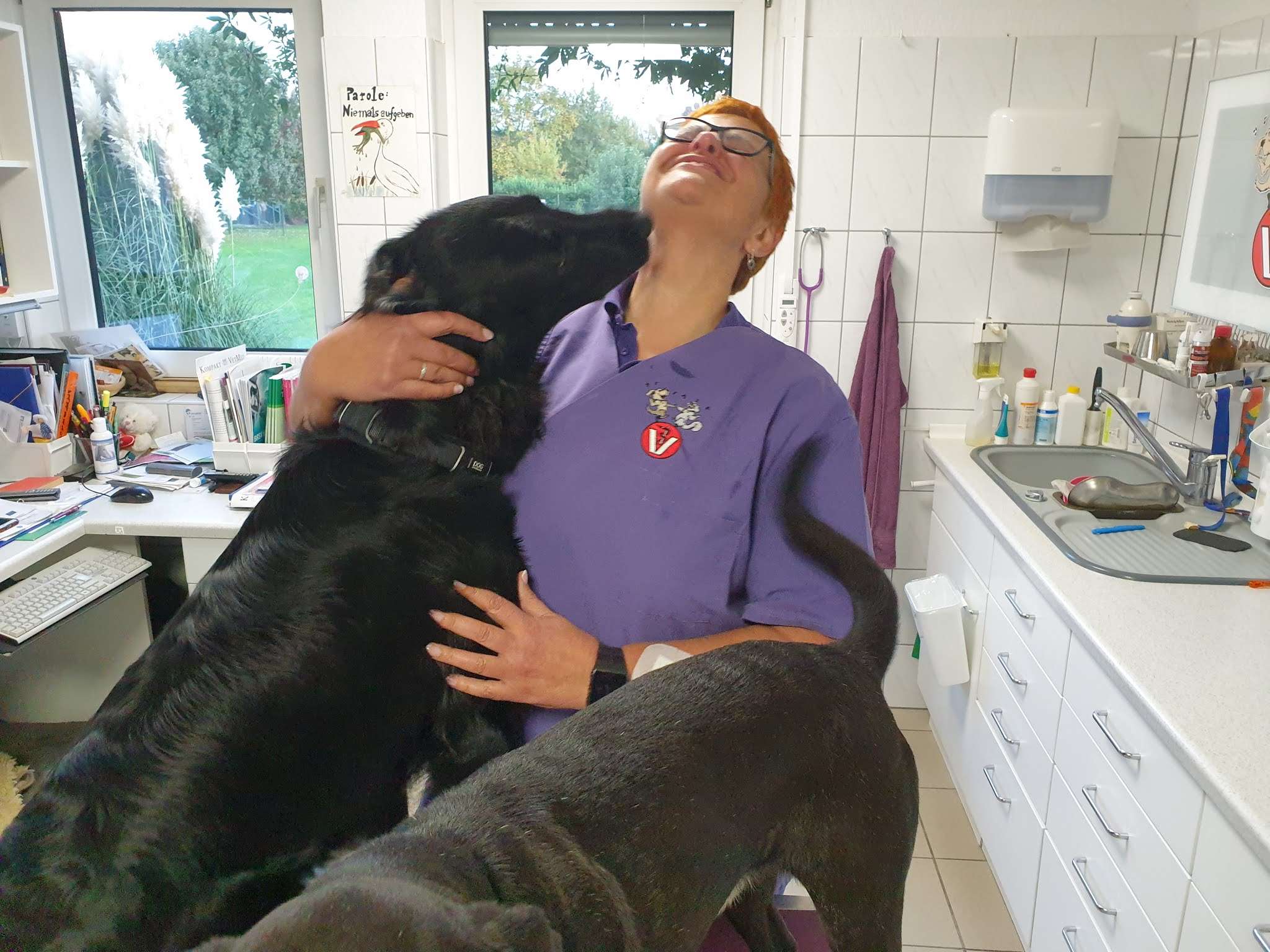
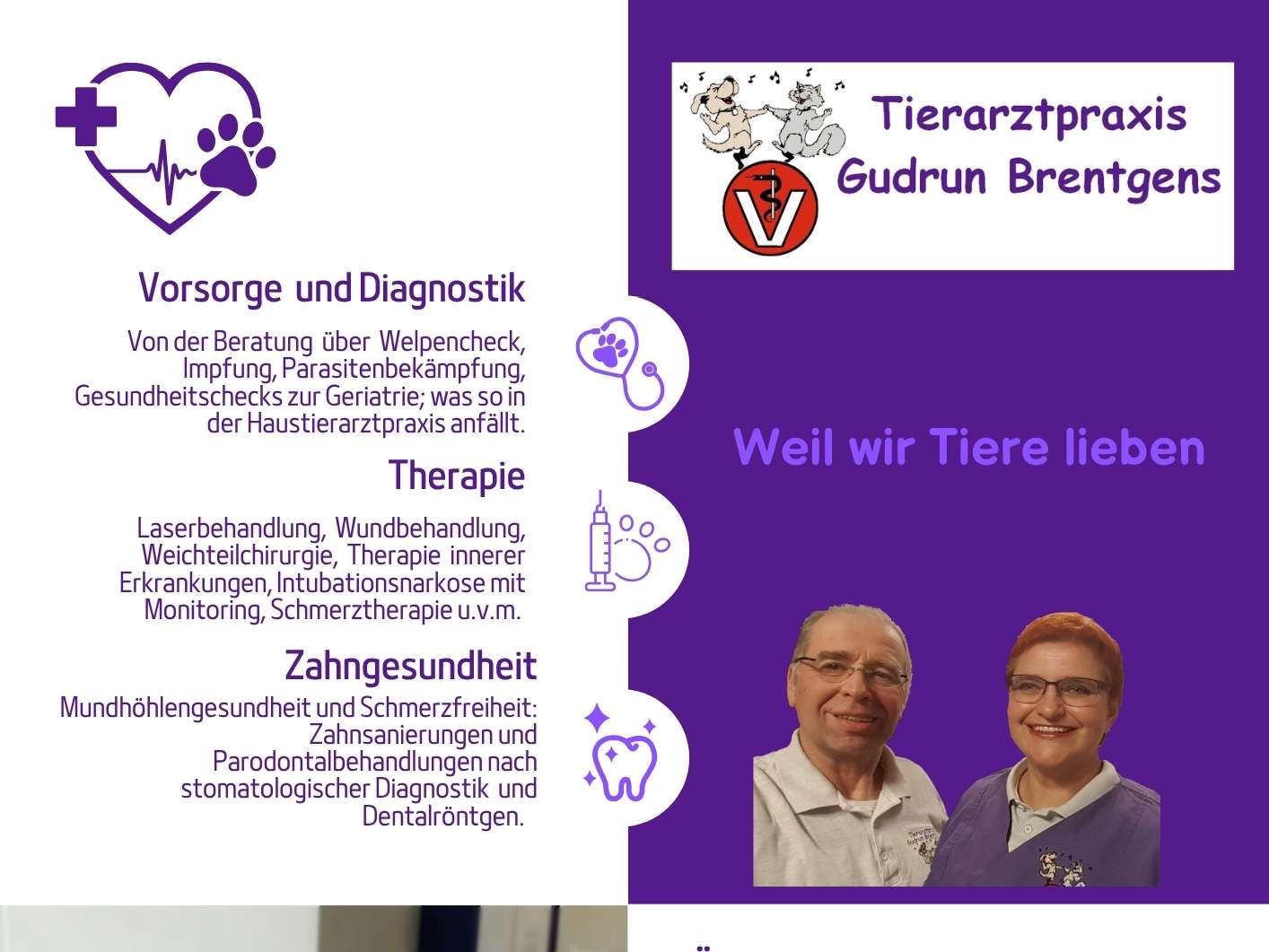
Tierarztpraxis Brentgens in Jülich-Koslar cares for dogs and cats with a strong focus on veterinary dentistry: digital dental X-rays, gentle dental cleanings, and treatment for FORL are part of everyday life here. Practice owner Gudrun Brentgens works as a veterinary dentist in accordance with the guidelines of the German Society for Veterinary Dentistry and tailors each anesthesia individually to age, pre-existing conditions, and the type of procedure. Instead of open office hours, the team works by appointment so there are fewer unfamiliar animals in the waiting room and more peace and quiet for examinations. Anyone who is unsure whether a visit is necessary can use a video consultation, and in complex cases the practice refers patients to specialized colleagues.
Treated animals
Small Animals & Pets
- cats
- dogs
- rabbits
- small rodents
Medical focus areas and specializations
- acupuncture
- alternative medicine
- anesthesia
- breeding support
- dentistry
- dermatology
- endoscopy
- general medicine
- internal medicine
- laser therapy
- nutrition counseling
- parasitology
- surgery
- travel advice
- ultrasound
- vaccinations
- x-ray
Services
- LaboratoryOn-site blood, urine, and tissue analysis
- Video consultationConsultation by video call, from home
Opening hours
- Monday
- 9:30 AM–12:00 PM4:00 PM–7:00 PM
- Tuesday
- 9:30 AM–12:00 PM4:00 PM–7:00 PM
- Wednesday
- Closed
- Thursday
- 9:30 AM–12:00 PM4:00 PM–7:00 PM
- Friday
- 9:30 AM–12:00 PM4:00 PM–5:00 PM
- Saturday
- Closed
- Sunday
- Closed
Emergencies
Appointments & new clients
Spoken languages
- 🇩🇪 German
Payment methods
Contact
- Website
- Email
- Phone
- Fax
- Facebook
Practice location
Tierarztpraxis Brentgens
Practice location
Hasenfelder Straße 10
52428 Jülich
Germany
Team 1
Reviews
We've been bringing our "zoo" (rabbits and dogs) to this practice for several years now. My Flat-Coated Retriever, Kenai, goes absolutely crazy every time we arrive! Not because he doesn't want to come in, but because he can't wait to get into the examination room!! Dr. Brentgens loves her patients and what she does. I can't even begin to list everything she's done for our animals... ;-) We wouldn't go to any other vet!!! I highly recommend her!!! ... I previously read a one-star review... Unfortunately, I can't help but write a few words here... "I don't know if the vet is competent, because she brushed me off. Even though I live practically next door, she told me to drive to Aachen with my dwarf hamster, violating the 15 km travel ban due to COVID. She made it quite clear that she didn't want to deal with my pet because she didn't have the time to discuss the problem over the phone. But there's no other way! Because of COVID, you're not even allowed to enter the practice to talk to the vet. It's not an emergency, so I can wait a few weeks. But she still insists I drive to Aachen... Well, if she pays the fine, I'll gladly do it. Anything is better than such an uninterested vet. If she had said that she simply wasn't competent in this area/with the animal, I definitely would have given more stars for her honesty and for such helpful advice. But now..." "We have what we have." As far as I can tell, the vet is very competent! We've never been brushed off! But I'm also aware that our animals aren't the only patients at the practice and therefore aren't always seen first... I consider it perfectly normal that one shouldn't enter a veterinary practice during a pandemic. The vet would be jeopardizing her livelihood, as she would have to close her practice if someone were to become demonstrably infected with Covid there. A consultation with her can, of course, take place outside the practice... And since when is there a ban on driving more than 15 km??? I think I'll leave the rest uncommented due to its absurdity... Because we know what we have in our vet!!
Our cat is very territorial and gets bitten often. Ms. Brentgens goes to great lengths to help and has been able to heal every bite in record time.
If we could, we'd give 100 stars. Mrs. Brentgens has been helping us with advice and support for our cats and dogs for years. Thank you so much! 🫶❤️
We would give the Brentgens practice team 10 stars if we could. We regularly visit the practice with our dog Diego and feel very well cared for, receive excellent advice, and receive top-notch medical attention. Ms. Brentgens' expertise has given Diego a new lease on life. We are very grateful for this and highly recommend the Brentgens practice.
The veterinarian takes plenty of time for both the person and the dog. She answers questions and acts in the best interests of the animal, not according to a rigid protocol.
Frequently asked questions
Cats often continue to eat even with a painful oral cavity, which is why the signs are easy to miss: drooling, altered or picky eating, bad breath, withdrawal, reduced grooming, head tilting, teeth chattering, or weight loss. Sudden irritability when stroked and house-soiling can also indicate dental disease.
Many changes lie below the gumline and cannot be seen even upon careful examination. Digital dental X-rays image each tooth root individually and show root remnants, FORL, or infected bone. Only then is it possible to decide which teeth can be saved and which must be removed.
Following a preliminary discussion and an assessment of anesthesia capability, tartar above and below the gumline is first removed under intubation anesthesia, then each tooth is individually assessed with a probe and X-rayed. Diseased teeth are gently extracted, larger wounds are closed with self-dissolving sutures, and the teeth are polished at the end. This takes significantly longer than a tartar removal and involves several people on the team, including someone dedicated exclusively to monitoring the anesthesia.
No food should be eaten at least six hours before the drop-off, not even treats from hiding spots; water may be drunk until the anesthesia. The animal should also be brought as calmly and without major excitement as possible, because they clearly sense nervousness.
With scheduled appointments, waiting times remain short and the animal encounters fewer unfamiliar animals in the waiting room, which reduces fear and the risk of mutual infection. More time remains for each individual examination, allowing even anxious patients to be treated more calmly. The practice therefore asks that cancellations be made early so the slot can be given to someone else.
The ability to undergo anesthesia is examined beforehand and medications are calculated based on weight, age, and pre-existing conditions. During the procedure, pulse oximeters, ECGs, blood pressure monitors, and carbon dioxide sensors monitor the patient, an infusion runs via a pump, and a warm-air blanket keeps body temperature stable. The animal is allowed to wake up in a video-monitored, warm room where breathing is also monitored by a sensor.
Veterinary practices nearby

Are you the owner or a team member of this practice? Claim this profile to manage it yourself.