Tierarztpraxis für Verhaltenstherapie und Biss-Prävention
Practice in Stengelstraße 6, 80805 München, Germany
House calls across the Munich, Freising, Fürstenfeldbruck area
- An online seminar preparing for the competency test in accordance with Section 11 of the Animal Welfare Act will take place on November 28, 2026.
- On December 3, 2026, at 4 PM, there will be a last-minute New Year's Eve training session for dogs in a small group (without dog, around 75 euros including materials).
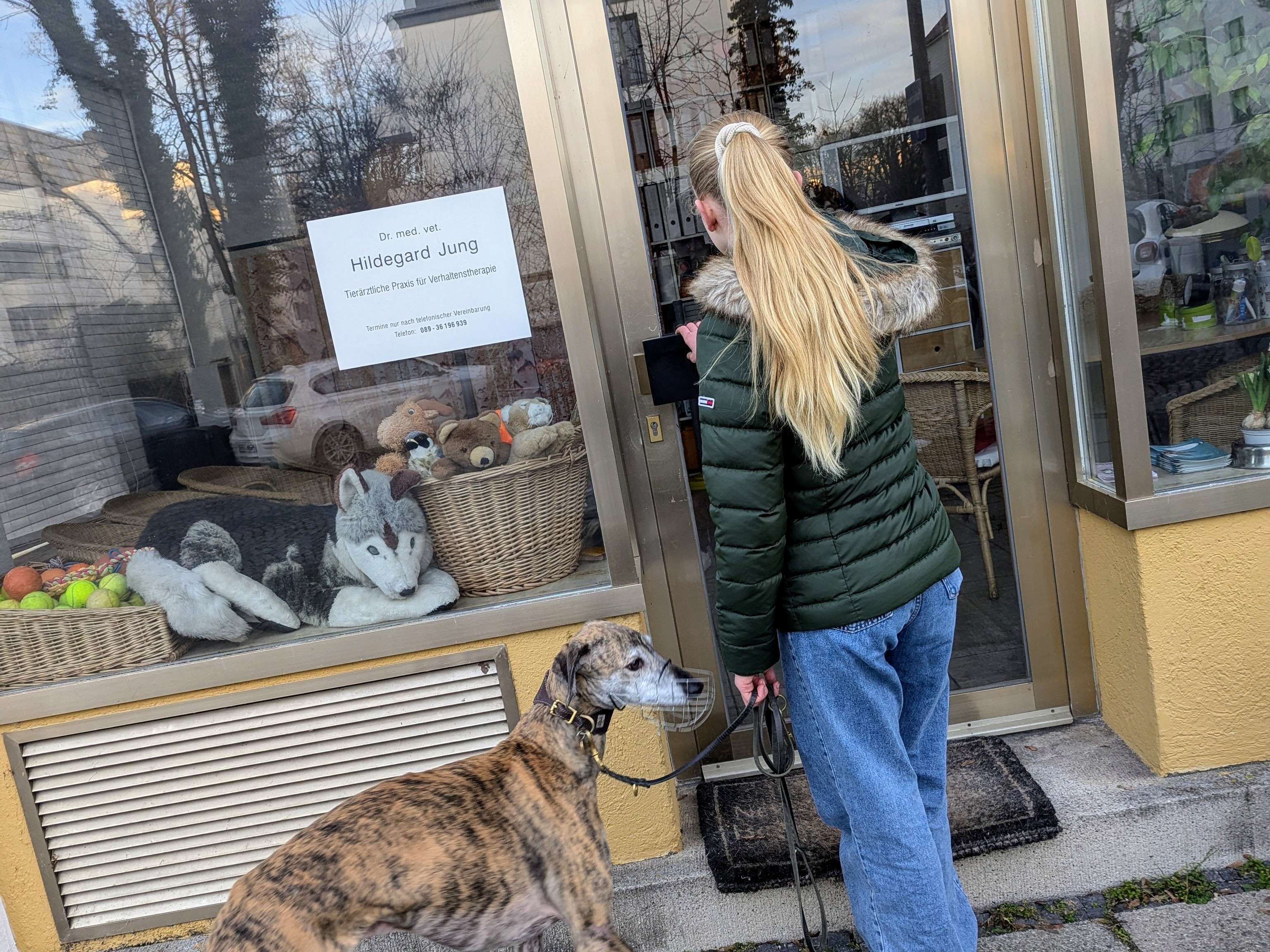
The Munich veterinary practice for behavioral therapy and bite prevention is dedicated to dogs and cats with anxiety, aggression, or other behavioral problems. It all starts with a thorough diagnosis: it clarifies whether behavior is normal from the animal's perspective or in need of treatment, and a training plan for everyday life is developed from there. Work is done using food, clickers, and toys; there is no couch, because dogs are better off staying on the carpet. Alongside behavioral counseling, medical training, and private sessions, the practice offers home visits, expert opinions, and dog handler's license courses. There are also programs for children to practice safe interaction with dogs.
Treated animals
Small Animals & Pets
- cats
- dogs
Medical focus areas and specializations
- behavioral science
Services
- Video consultationConsultation by video call, from home
Appointments & new clients
Spoken languages
- 🇩🇪 German
Payment methods
Contact
- Website
- Email
- Phone
Practice location and mobile service area
Tierarztpraxis für Verhaltenstherapie und Biss-Prävention
Practice location
Stengelstraße 6
80805 München
Germany
House calls
Munich, Freising, Fürstenfeldbruck
Team 2
Reviews
Very competent and friendly.
A truly wonderful woman, she gave a very fair assessment of my Bull Terrier, taking into account his entire complicated history and development. Ms. Jung has an enormous amount of expertise and is also completely dedicated. She's one of the few who doesn't immediately dismiss it with a "positive outcome is unlikely" and she has already helped me and my dogs so much! Thank you so much, Ms. Jung!
Excellent dog behavior therapist! My poodle and I have already been to Dr. Jung because he used to chase joggers and cyclists and bark at them. With her help, we got that under control. Now my dog is learning to stay home alone. What I appreciate is that you don't get any generic advice, but rather clear and precise instructions. Dr. Jung also provides support during the training by phone or email. It's more expensive than a regular dog trainer, but the success and less frustration are worth the difference to me.
Thanks to Dr. Jung, my Dusty has his life back! He was just a shell of his former self, plagued by panic and anxiety that first appeared suddenly four years ago. It kept getting worse, and no one could help him. Countless alternative practitioners, animal communication sessions, examinations, etc... Thousands of euros, thousands of tears. Thanks to the medication, he's learning that he doesn't have to be afraid anymore! He's doing incredibly well, and we're continuing to work on his training plan! Thank you from the bottom of my heart!! Absolutely recommended for dogs with behavioral issues!
Very competent, friendly, and professional! Dr. Jung helped us a lot, thank you!
Frequently asked questions
The process begins with a detailed consultation of about one and a half hours, during which a questionnaire is evaluated. This results in a clear diagnosis and an initial therapy plan; if a behavioral disorder requires treatment, therapy begins right at this appointment.
As a rule, animals come on a referral from their primary care veterinarian, who automatically receives feedback after the appointment. If a medical background becomes apparent, we discuss which further examinations make sense.
Yes. The initial consultation usually takes place at the practice; if a problem only shows up at home or in the office, training takes place there. Home visits are the standard for cats.
The actual therapy is carried out by the pet owner in everyday life – time, patience, and consistency determine success. The practice provides telephone support and adjusts the plan; medication alone does not solve a behavioral problem.
The dog learns simple cooperation signals, such as standing on a specific mat: if it stays there, things continue, if it stands up, it is a no. This allows it to be brushed, have its paws dried, or be examined by the vet without stress.
Two to three months before thunderstorm season and in the weeks before New Year's Eve. After an initial individual appointment, work can continue in a group.
Veterinary practices nearby




Are you the owner or a team member of this practice? Claim this profile to manage it yourself.