Separation Anxiety in Dogs When the Holidays End: Preparing Your Dog to Be Home Alone Again
A practical guide to recognising and preventing separation anxiety in dogs as owners return to work after the holidays, with a step-by-step plan for rebuilding time alone.
- dogs
- behavioral science
Key takeaways
- Practise short absences daily, building up gradually from seconds
- Start departure practice in a neutral room, not at the front door
- Film the first 30 to 60 minutes after leaving to see what actually happens
- Break up departure cues like keys and coats so they stop predicting a long absence
- Avoid punishment, flooding, and forcing a panicking dog into a crate
- Call your vet promptly if you see self-injury, non-stop howling, or refusal to eat alone
Coming back from a stretch of holidays is one of the most predictable triggers for separation anxiety in dogs. For a week or two your dog has had company on the sofa all day, extra walks, people coming and going, maybe children home from school. Then on a Monday morning the house empties for nine hours. This guide is for owners who can see that shift coming, and for those already dealing with the aftermath: shredded door frames, a neighbour's message about howling, or a dog who starts trembling the moment the work bag comes out.
Why does the end of the holidays trigger separation anxiety in dogs?
Dogs are good at predicting patterns, and a sudden change in the household routine is one of the classic precipitating events. Video studies of dogs left home alone note that problems often surface when an owner's schedule shifts abruptly, such as a change in working hours or a return to work after a long break. The holiday period compresses exactly that: weeks of near-constant company, then an abrupt return to long absences.
This is not a rare or exotic problem. Depending on how it is defined, somewhere between about 22% and 55% of the general dog population show at least some sign of distress or difficulty when left alone, and these cases make up a large share of behaviour referrals.
Two groups deserve extra thought. Puppies who arrived during the holidays have never experienced a normal working day. And dogs adopted over the break have had their whole world change twice in a fortnight.
What does separation distress actually look like?
Most owners only see the evidence: chewed skirting boards, a puddle by the door, an ecstatic greeting. The behaviour itself happens while you are out, and it starts fast. In filmed studies of dogs with separation-related problems, most showed signs within ten minutes of the door closing, with vocalising beginning at around three minutes on average and destruction at around seven. Panting made up a noticeable share of their time alone.
The type of noise matters too. Barking is common in all sorts of dogs, but researchers comparing recordings found that early, frequent whining was the more reliable marker of a dog struggling with separation.
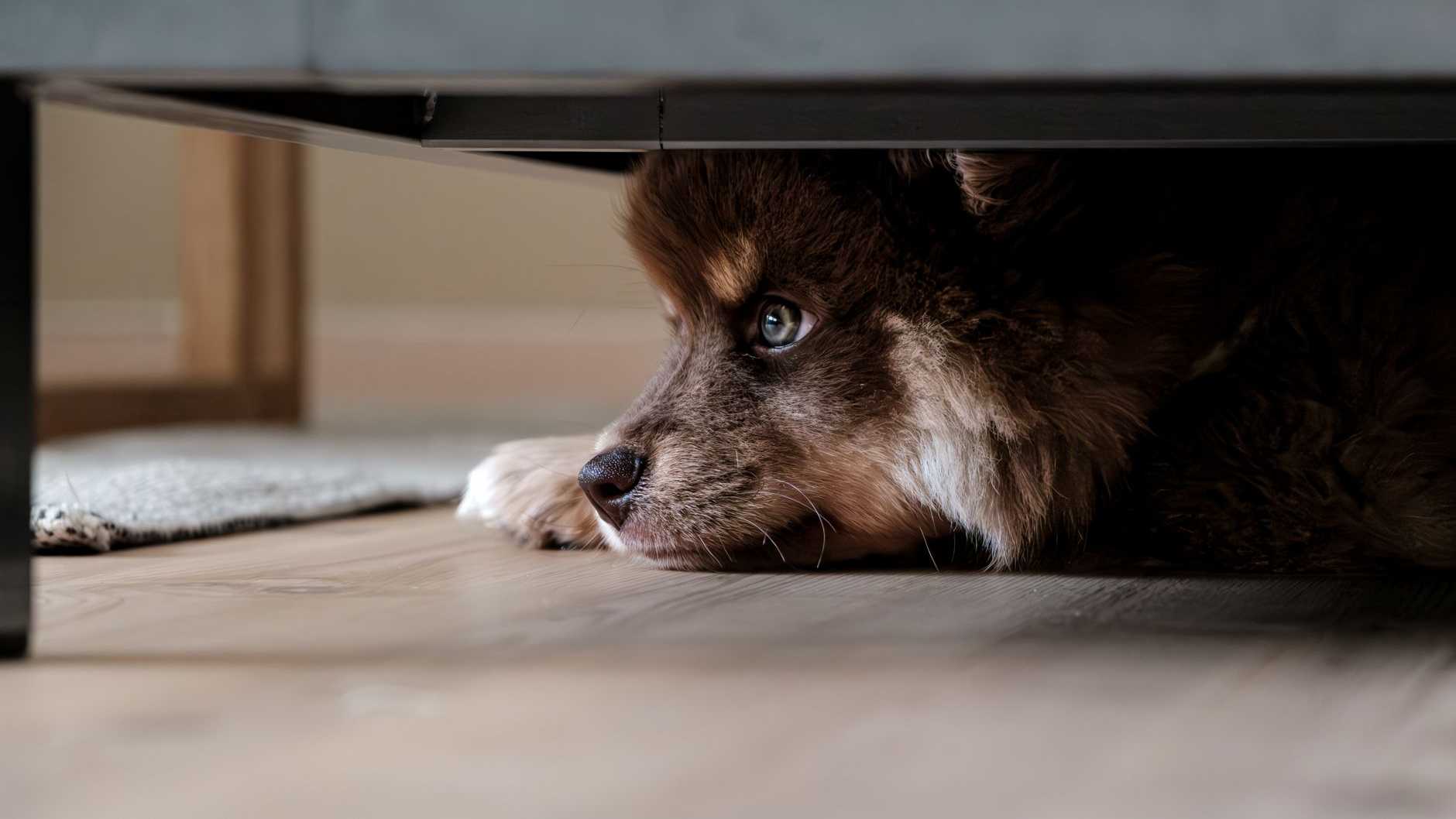
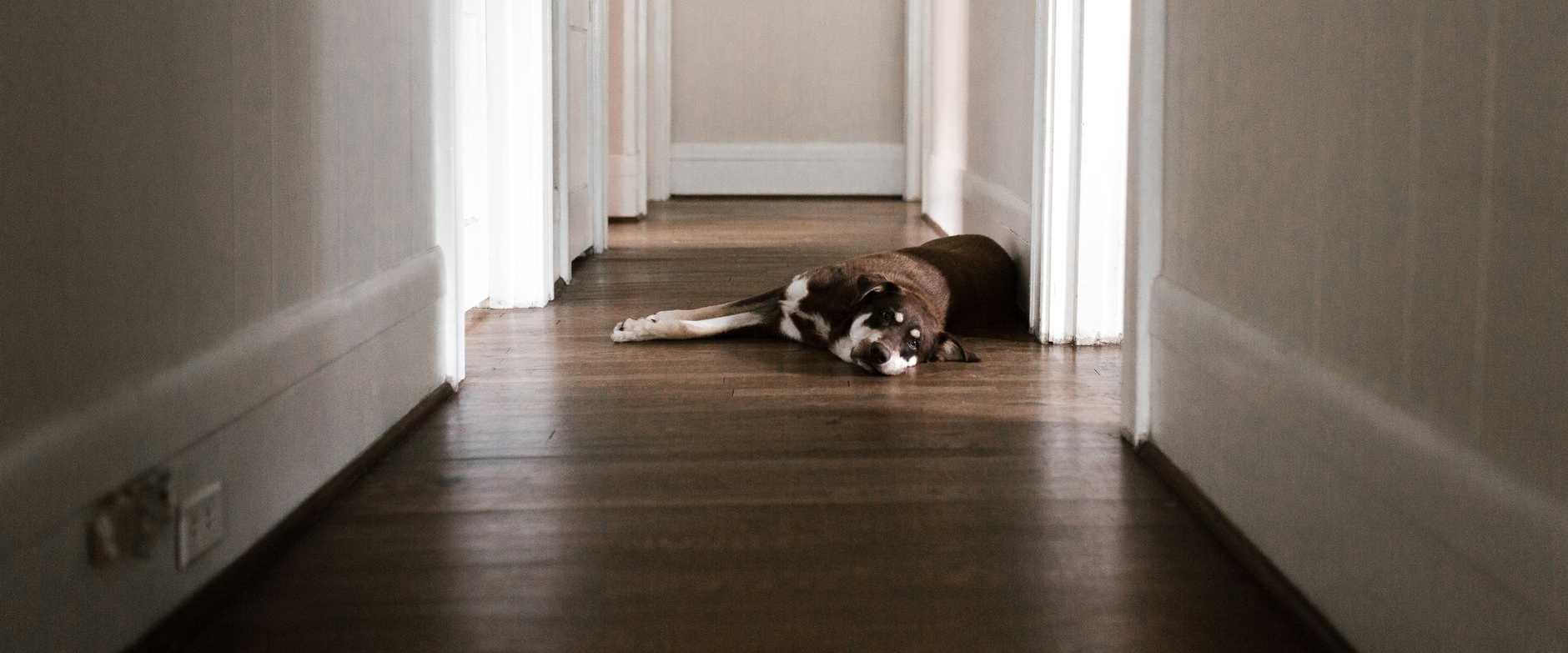
Plenty of signs are easy to miss. Alongside the obvious destruction, soiling and noise, veterinary behaviour specialists list drooling, panting, freezing, pacing, hiding and social withdrawal as signs of anxiety, and dogs who quietly shut down may be suffering just as much as the ones who bark. Worn nails, scraped teeth or scuffed paws are physical clues that a dog has been trying to escape.
The single most useful thing you can do this week is set up a phone or camera and record the first 30 to 60 minutes after you leave. Owner reports alone tend to underestimate what is happening.
Is it anxiety, or something else?
"Separation anxiety" is a useful shorthand, but it covers several different problems. Work on classifying these cases has identified distinct patterns, including frustration focused on the exit route, panic at losing social contact, and behaviour that looks more like boredom than fear. A bored adolescent who chews the sofa needs a different plan from a dog who claws at the door in a panic, so the distinction matters.
Separation problems also travel with other fears. Noise sensitivity frequently overlaps with separation distress, so if your dog is one of the dogs who panic during fireworks and thunderstorms, mention that to your vet as part of the same picture.
How do I prepare my dog to be home alone again?
Start before the first working day, not on it. The aim is to make being alone boring and predictable rather than frightening.
- Practise short absences daily: Begin with the length of absence your dog is genuinely relaxed with, even if that is 20 seconds behind a closed interior door. Return before there is any whining or scratching. Build up in small, uneven steps rather than a steady climb.
- Start in a neutral room: Working from a doorway inside the house, rather than the front door, avoids all the emotional weight your dog has already attached to your leaving cues. Move to the real exit only once the practice room is easy.
- Pair alone time with something good: A stuffed food toy or a slow feeder given as you leave helps build a positive association with departures instead of a dreaded one. Only use this while the absences are still short enough that your dog stays comfortable.
- Break up the departure cues: Pick up your keys and put them down again. Put your coat on and make a cup of tea. Repeated a dozen times a day, these cues stop predicting a nine-hour absence.
- Rebuild independence indoors: If your dog follows you from room to room, encourage settled rest on a bed a few metres away while you are still home, rewarding calm.
- Stagger the return to work: Where you have any flexibility, a half day, a midday visit from a friend, or a couple of hours at daycare in the first week softens the jump.
- Meet the basics first: A walk and a toilet break before you leave, water available, and a comfortable resting place make the rest of the plan easier.
One point where honest advice varies: many behaviour plans recommend calm, low-key departures and arrivals, ignoring the dog until they settle, but more recent protocols question whether this is necessary and some clinicians suggest a quiet, gentle interaction before leaving may actually help. What is consistent is avoiding high-arousal, exciting goodbyes and homecomings. Follow the plan your own vet or behaviourist sets out for your dog.
What should I avoid?
Do not tell your dog off for the mess. Punishment after the fact does nothing, and reward-based training produces fewer behaviour problems and less fear than confrontational methods. Flooding, meaning leaving a panicking dog alone for hours in the hope they get used to it, is specifically warned against because it tends to make animals worse.
Also be cautious about crating a dog who panics when confined. A distressed dog can injure themselves badly on bars and doors. And do not get a second dog as a fix. It is a big decision on its own, and it does not reliably solve the problem.
When should I call the vet?
Contact your vet promptly if you see any of the following:
- Self-injury: bleeding paws, broken or worn-down nails, damaged teeth, or wounds from trying to get through a door or window
- Escape attempts involving glass, balconies or upper-floor windows, which are genuinely dangerous
- A dog who will not eat or drink at all in your absence, or who vomits or has diarrhoea every time they are left
- Hours of continuous howling or barking, which points to real distress as well as risking your relationship with neighbours
- Heavy drooling, trembling or an inability to settle at any point during the day
- Signs that appear suddenly in an older dog who was previously fine, since new behaviour changes in seniors need a physical check first
Book a normal appointment rather than waiting to see whether it settles. Untreated separation problems tend to entrench, and early treatment gives the best outcome.
Do medications help, or are they just sedation?
Medication is not a first resort for a mild case, and it never replaces the training plan. For dogs whose distress is severe enough that they cannot learn while alone, it can make the difference between a plan that works and one that stalls.
A small number of medicines are formally approved for canine separation anxiety in some countries, and controlled studies support their use in combination with behaviour modification rather than on their own. Which products are licensed varies by country, so your vet will advise on what is available where you live. Expect patience: the effects of some of these medicines may take five to eight weeks to appear, and they should be stopped gradually rather than abruptly.
A fair concern is whether medication simply flattens the dog. One study using a test of "optimistic" versus "pessimistic" decision making found that dogs treated with medication plus a behaviour plan shifted towards the responses of unaffected control dogs, which suggests the underlying emotional state improved rather than the behaviour just being suppressed. It was a small study, so treat it as encouraging rather than conclusive.
How long will this take?
Longer than most owners hope. A systematic review of counterconditioning found that separation-related behaviours were more resistant to change than many other canine behaviour problems. Published case reports of dogs going from distress within seconds of a door closing to relaxed multi-hour absences describe programmes running over many months, with steady, small increments.
That is not a reason to give up. It is a reason to start early, keep sessions short, and measure progress in minutes rather than hours.
The takeaway
The end of the holidays is a predictable stressor, which means it is one you can prepare for. Rehearse short absences now, film what happens when you leave, and treat early whining and pacing as information rather than naughtiness. If your dog is injuring themselves, vocalising for hours, or refusing food while alone, get your vet involved rather than waiting it out. This guide is general advice, and the right plan depends on your individual dog, so let a vet or a qualified behaviour professional who uses reward-based methods tailor it.