Praxis für Pferdezahnbehandlung und Akupunktur Dr. Tina Vortherms
Practice in Zum Scheerenberg 7, 37186 Moringen, Germany
Dr. Tina Vortherms runs a veterinary practice in Moringen that focuses entirely on the equine mouth: incisors and cheek teeth are gently treated using electric diamond grinding tools and hand rasps, with the goal of achieving an evenly worn, balanced bite. Every treatment is preceded by a clinical examination of the head, oral cavity, jaw joint, and chewing muscles, as well as a discussion about any abnormalities observed while eating or riding. Findings such as caries, EOTRH, or dental fractures are documented and, if necessary, clarified via X-rays. Since 2026, TCVM acupuncture has been offered as a complementary service to help with issues such as tension, lameness, or metabolic problems, and can be combined with dental treatment during the same visit. Treatments take place right in your horse's stable, provided the area is even, non-slip, and features a suspension point for the head halter.
Treated animals
Large & Farm Animals
- horses
Medical focus areas and specializations
- acupuncture
- dentistry
Appointments & new clients
Spoken languages
- 🇩🇪 German
Contact
- Website
- Email
- Phone
- Facebook
Practice location
Praxis für Pferdezahnbehandlung und Akupunktur Dr. Tina Vortherms
Practice location
Zum Scheerenberg 7
37186 Moringen
Germany
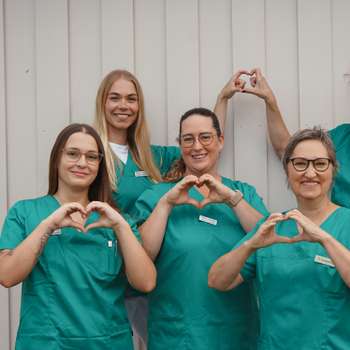
Team 1
Reviews
We are more than satisfied with the treatment of our horse and everything surrounding it, including appointment scheduling, coordination, and accessibility. We look forward to future treatments.
Super competent and friendly advice and treatment; everything is explained in detail using the horse as an example. Highly recommended.
Competent support!
I've been to several equine dental practitioners, and I must say none of them have treated my horses' teeth as conscientiously and professionally as Tina Vortherms. I wouldn't go to anyone else. Furthermore, I appreciate Tina Vortherms' honest and open manner.
From the sedation, through the extraction of the incisors and the treatment of the molars, to the patient's awakening, everything was carried out with the utmost professionalism, in a well-organized and calm manner. As a horse owner, I had a very good feeling and felt that my horse and I were in the best possible hands! Thank you!
Frequently asked questions
For the appointment, you will need the horse's passport, proof of up-to-date tetanus vaccination, a cooler or fly rug, water, and an electrical outlet. The treatment area should be even, non-slip, at least two meters high, and equipped with a suspension point for the head halter. Between October and April, it must be fully enclosed by four walls.
Yes, the horse is allowed to eat hay normally before being sedated. However, it should not have been worked prior to the appointment. After the treatment, the horse will be kept warm and must remain without food until it has fully woken up—ideally wearing a grazing muzzle in a shavings box or on a paddock without access to feed.
Depending on the medication used, horses can test positive for doping for six to nine days following the treatment. You should therefore allow for a buffer of about two weeks before a competition.
Acupuncture can be combined with dental treatment during the same visit. It is performed before sedation so that the awake horse's reaction to the needles can be observed. This combination must be requested in advance so that enough time can be scheduled.
The standard recommendation is one appointment per year. A shorter interval may be necessary for young horses undergoing teething changes, older horses starting from around 20 years of age, or in cases of misalignments or missing teeth. When mouths are regularly balanced, 18 to 24 months are often possible; a personalized recommendation is given at the end of every treatment.
Pregnant mares are only treated in absolute emergencies. Mares with foals at foot are not a problem; for broodmares that are to be bred again right away, the best time for an appointment is immediately after foaling.
For riding horses that are to be ridden with a bit, Dr. Tina Vortherms recommends extracting wolf teeth before backing. This is done as part of the routine dental treatment and involves a local anesthetic in addition to sedation.
Veterinary practices nearby

Are you the owner or a team member of this practice? Claim this profile to manage it yourself.