Flystrike in Rabbits: Symptoms, Emergency Steps and Prevention
A guide to spotting the early and advanced symptoms of flystrike in rabbits, what to do immediately if you find eggs or maggots, and how to prevent this fast-moving summer emergency.
- rabbits
- dermatology
- nutrition counseling
- dentistry
- Fly Strike / Myiasis
- Urinary Tract Infection
- Wound Care
- Shock
- Heat Stress
·
Key takeaways
- Check your rabbit's bottom and tail area twice a day in warm weather
- Treat any fly eggs or maggots as an immediate emergency, not a routine appointment
- Never try to remove maggots yourself or bathe your rabbit in water
- Keep her calm, warm and quiet in a carrier on the way to the vet
- Address underlying causes like weight, dental disease, arthritis or urinary problems
- Keep housing and litter areas clean and dry to reduce fly attraction
Flystrike in rabbits is the reason experienced owners get into the habit of turning their rabbit over every single day in summer. Knowing the symptoms matters because this condition moves faster than almost anything else you will meet in rabbit keeping: flies lay eggs on damp or soiled fur, the eggs hatch within hours, and the larvae start feeding on living skin. A rabbit who looked fine at breakfast can be critically ill by evening. This guide is for owners of pet rabbits, indoors or out, and covers what to look for, what to do the moment you find maggots, and how to stop it happening in the first place.
What is flystrike in rabbits?
Flystrike, also called myiasis, happens when blowflies lay eggs on a rabbit and the hatched larvae (maggots) feed on the rabbit's flesh. Greenbottles and bluebottles are the usual culprits. One fly can lay up to 200 eggs, those eggs can hatch within a few hours, and the condition can become fatal inside 24 hours. Which blowfly species does the damage varies by region: the green bottle fly Lucilia sericata is the main one in Britain, while other blowflies dominate elsewhere. What they all have in common is an attraction to moisture, wounds and the smell of urine and droppings, so damp or soiled fur is an open invitation.
The area around the bottom and genitals is by far the most common site. In a study of veterinary records from 389 UK practices, just over half of recorded flystrike lesions were around the perineum, the area under the tail, with smaller numbers on the head or elsewhere.
Two facts explain why vets treat this as a true emergency. First, the speed: once larvae are established, they tunnel through skin into the tissue beneath, and an affected animal can die from shock, toxin release or infection. Second, the outcomes. In that same UK dataset, roughly 45% of flystrike consultations ended with the rabbit dying or being put to sleep, and in a separate survey of rabbits under primary veterinary care in England, myiasis was the single most commonly recorded cause of death. Caught early, though, rabbits can and do recover fully.
What are the rabbit flystrike symptoms to look for?
You are watching for two very different pictures: the earliest stage, when there are only eggs or tiny larvae and your rabbit may seem almost normal, and the advanced stage, when the rabbit is in shock.
Early signs, when treatment works best
- Small clusters that look like grains of cooked rice or off-white sesame seeds stuck to the fur, usually around the tail, bottom, genitals or in skin folds. These are fly eggs
- Tiny pale maggots moving in the fur or in soiled areas
- A damp, matted or discoloured rear end, or a rabbit who suddenly smells unpleasant
- Fewer or softer droppings than usual, or soft sticky caecotrophs (the droppings rabbits normally re-eat) smeared into the fur
- Restlessness: shifting position, digging into corners, flinching when you touch near the tail
- Sitting unusually quiet and still, or ignoring a favourite food
Red-flag signs of advanced flystrike
Contact an emergency vet immediately if you see any of these:
- Visible maggots, especially large ones, or open sores containing eggs or larvae
- Patches of wet fur and fur loss over the back end, often with a strong bad smell
- Sitting hunched, hiding, grinding teeth, or refusing all food for more than 12 hours
- Cold ears and feet, weakness, wobbliness or collapse
- Laboured breathing
A rabbit in this state is in severe pain and probably in shock. Rabbits also hide illness extremely well, which is exactly why a hands-on check beats watching from across the room.
Which rabbits are most at risk?
Flystrike is usually a symptom of something else. Anything that leaves a rabbit damp, soiled or unable to groom raises the risk sharply:
- Overweight rabbits: they physically cannot reach round to clean their bottom, and often sit close to where they toilet
- Dental disease: painful teeth stop a rabbit picking up its caecotrophs, which then stick to the fur around the rear. If your rabbit has become fussy about hay, it is worth reading up on the early signs of dental disease
- Arthritis and older age: stiff rabbits cannot twist to groom, and the UK study found rabbits aged five and over were more than 3.8 times as likely to be presented with flystrike
- Urinary problems: dribbling urine or sludgy urine keeps the skin around the genitals permanently wet
- Soft stools: often linked to a diet high in sugar or starch, or a sudden change of food
- Unspayed females: the same UK dataset found entire females were about 3.3 times more likely to be affected than neutered females, and a large dewlap traps moisture
- Long or dense coats: angora and lionhead types, and any rabbit with a woolly rear
- Open wounds and abscesses: these attract egg-laying flies directly
- Dirty or damp housing: a build-up of urine and droppings draws flies to your rabbit even if she is clean herself
Warm weather is the multiplier. The UK researchers calculated roughly a third higher risk of flystrike for every 1°C rise in environmental temperature across the range they studied, with cases peaking in July and August and starting earlier in the south. Cases cluster in the warmer months, broadly May to October in temperate climates, but flystrike can happen at any time of year. Treat the whole warm season as risk season, not just heatwaves.
What should I do if I find maggots on my rabbit?
Act as if the clock is running, because it is. Flystrike is an emergency at 3am on a Sunday just as much as at 10am on a Tuesday.
- Phone your vet or the nearest emergency practice now: say you suspect flystrike and need to be seen immediately. Do not wait for a routine appointment.
- Do not try to remove the maggots yourself: picking at them is painful and can tip a rabbit into shock, and it delays the treatment she actually needs. Even one maggot warrants an emergency appointment.
- Do not put your rabbit in water: trying to drown the maggots does not work and can cause shock. Wet fur also gets in the way of the clippers your vet needs to use.
- Keep her calm, warm and quiet on the way in: a carrier with clean, dry bedding, out of direct sun and away from flies.
- Bring her bonded companion if you have one: it lowers stress for both rabbits and keeps the pair together.
- Give no medicines of your own: only use products your vet has recommended for your rabbit, as medicines meant for other species can be dangerous.
Even if you find only eggs and no maggots, phone your vet the same hour. Eggs mean flies have already chosen your rabbit.
What will the vet do?
Expect a hospital admission rather than a quick consult. Rabbits with flystrike are almost always admitted for pain relief that continues throughout treatment, fluids to treat shock, removal of the maggots, wound cleaning (usually under anaesthesia once the rabbit is stable), syringe feeding, medication to keep the gut moving, and warmth with close monitoring.
Your vet will clip the fur, clean the skin and take out as many larvae as possible, and may use a medication that kills any remaining maggots and eggs. Antibiotics are added if the wounds are infected. Where damage is extensive and the rabbit is already deep in shock, euthanasia is sometimes the kindest decision, and a good vet will tell you honestly which situation you are in.
Expect questions about teeth, weight, mobility, bladder and diet too. Finding and fixing the underlying cause is what stops this happening again next month.
How do I prevent flystrike in rabbits?
The twice-daily bottom check
Rabbit charities and vets give the same core advice: through warm weather, check the skin and fur around the bottom and tail twice a day, dropping to weekly in cold weather. It takes under a minute per rabbit.
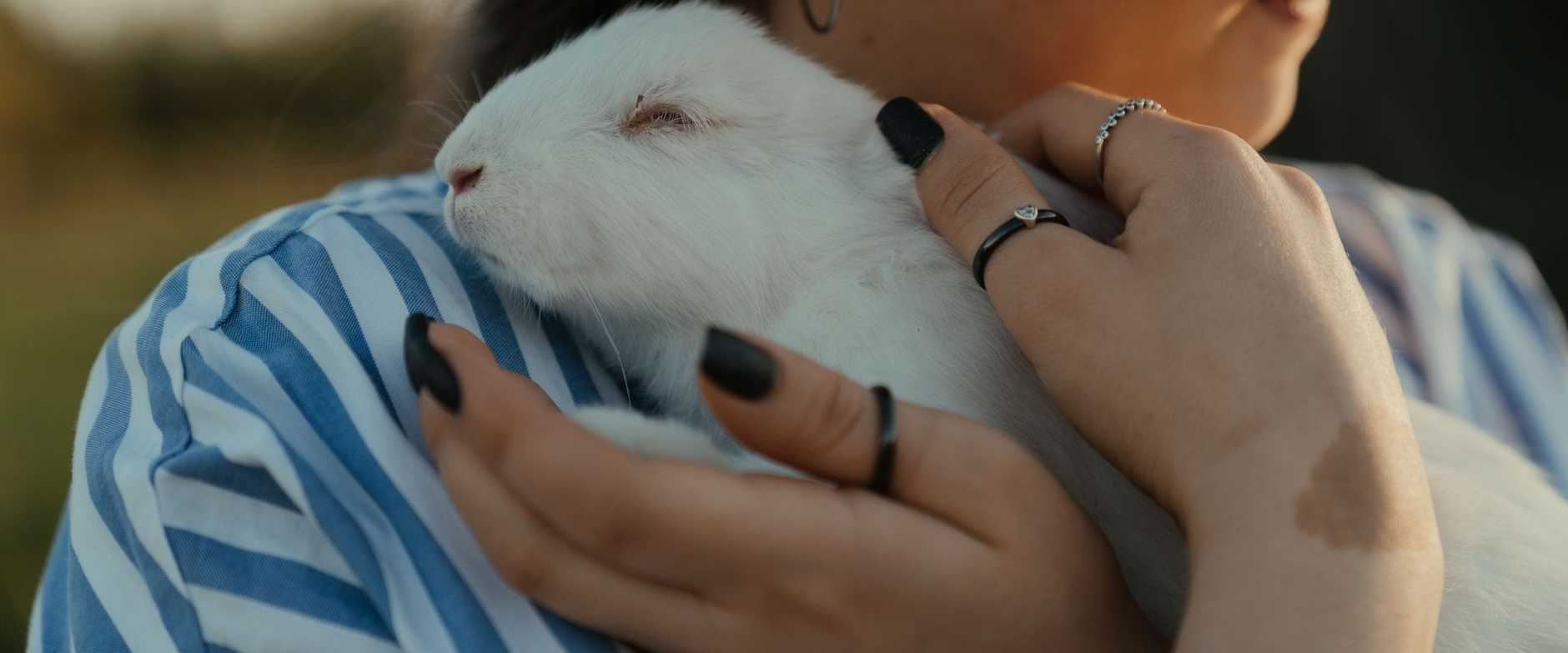
- Sit down with her supported on your lap or on a non-slip surface, supporting her hindquarters and never lifting her by the ears
- Part the fur around the anus, genitals, tail base, inner thighs and belly, and look at the skin, not just the coat
- Check any wound, scab or skin fold, plus the eyes and dewlap for dampness
- Gently clean away any soiling and make sure the fur is completely dry afterwards, because damp fur attracts flies too
- A dirty bottom is not normal for a healthy rabbit, so book a check to find out why rather than just cleaning it again tomorrow
Housing, diet and body condition
- Remove dirty litter and wet bedding every day so the housing and toileting area stay clean and dry
- Sweep or spot clean outdoor latrine areas so droppings do not build up
- Fit fly screens over hutch and run openings
- Feed a diet based overwhelmingly on grass and hay, with a small portion of fresh greens and only a small measure of pellets. Muesli-style mixes encourage selective feeding and dental problems
- Introduce new greens gradually, over at least a week, so stools stay firm
- Keep her lean enough to reach her own bottom, and have any weight, dental or mobility problem assessed rather than tolerated
- Have long-coated rabbits clipped short around the rear for summer, done by your vet or an experienced groomer
Preventive products
Topical products containing cyromazine, an insect growth regulator that stops fly eggs developing into damaging maggots, are applied to the back half of the rabbit and give protection for around ten weeks, so two applications can cover the high-risk period. They reduce risk but do not replace hygiene, husbandry and daily checks. Licensing and availability differ between countries, so ask your own vet what is approved where you live. Never use a dog or cat flea product on a rabbit without veterinary advice: fipronil in particular is contraindicated in rabbits because of severe toxic reactions in some individuals.
Can indoor rabbits get flystrike?
Yes. Blue Cross warns that all rabbits, even indoor ones, are at risk in the warmer months. Flies come in through open windows and doors, and a house rabbit with a soiled bottom is just as attractive to them as one in a hutch. If your indoor rabbit has a litter tray habit that leaves her damp, or has any of the risk factors above, check her twice daily just as you would an outdoor rabbit.
The takeaway
Flystrike is fast, painful and often fatal, and it is also one of the most preventable emergencies in rabbit medicine. Two habits carry almost all the weight: a hands-on check of your rabbit's rear end twice a day through the warm months, and treating any maggot or fly egg you find as a reason to phone a vet immediately rather than in the morning. If you are unsure whether what you are looking at is serious, call. No vet minds being asked about a rabbit's bottom in July.
This guide is general information and does not replace an examination by your own vet, who knows your rabbit.