Klinik für Geflügel
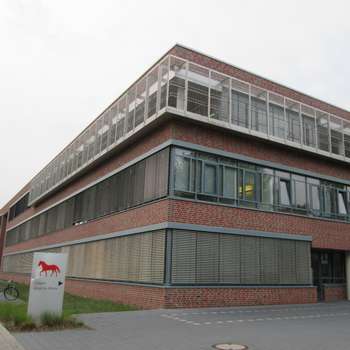
Practice in Bünteweg 17, 30559 Hannover, Germany
House calls across the Hanover, Hildesheim, Garbsen area
- The diagnostics department of the Clinic for Poultry will be closed from December 24, 2026 up to and including January 1, 2027. Salmonella samples will be accepted until December 16, 2026, and all other samples until December 18, 2026; sample processing will resume on January 4, 2027.
The Clinic for Poultry at the University of Veterinary Medicine Hannover cares for farmed poultry, hobby and fancy poultry, as well as homing and fancy pigeons. We conduct farm visits and pre-housing inspections on-site, examine submitted animals and samples, and perform bacteriological, virological, parasitological, and molecular biological testing including antibiograms in our own laboratory. Vaccination programs, hygiene concepts, and advice on husbandry and disease prevention are part of our services, alongside scheduled vaccinations for backyard chickens. Individual animals with bone fractures or those requiring X-rays or surgery are referred within the university to the Clinic for Small Mammals, Reptiles and Birds.
Treated animals
Avian (Birds)
- pigeons
Large & Farm Animals
- poultry
Medical focus areas and specializations
- parasitology
- vaccinations
Services
- LaboratoryOn-site blood, urine, and tissue analysis
Appointments & new clients
Spoken languages
- 🇩🇪 German
Contact
- Website
- Email
- Phone
- Fax
- Facebook
- Instagram
- YouTube
- LinkedIn
Practice location and mobile service area
Klinik für Geflügel
Practice location
Bünteweg 17
30559 Hannover
Germany
House calls
Hanover, Hildesheim, Garbsen
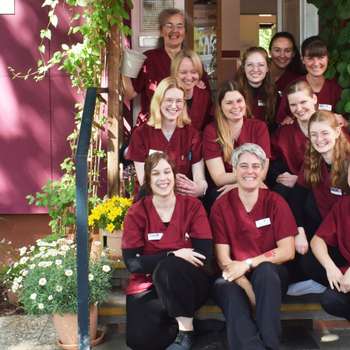
Team 23
Prof. Dr. Silke Rautenschlein
Director of the Clinic for Poultry; Veterinary Specialist for Poultry and for Microbiology
Nicole Molkenthin
Secretariat (on parental leave)
Sophie Helms
Secretariat
PD Dr. med. vet. habil. Arne Jung
Research Associate; Head of the Pathology and Laboratory Diagnostics Working Group and Experimental Animal Housing; Veterinary Specialist for Poultry and for Microbiology
Rebecca Lindenwald
Research Associate; Veterinarian; Specialist Trainee for Poultry
Marina Wienberg
Research Associate; Veterinarian
Andreas Münkel
Research Associate
Sana Adam
Veterinarian; PhD Student
Sarah Heynen
Veterinarian; Doctoral Student; Focus on Pathology and Laboratory Diagnostics
Lena Körner
Research Associate; Veterinarian; Focus on VIPER and Respiratory Pathogens in Chickens
Anna Putsch
Veterinarian; Focus on Teaching and Research Services
Ana María Tejedo Hurtado
Veterinarian; Focus on Enterococcus cecorum Disinfection
Johanna Trapp
Veterinarian; PhD Student
Julia-Martha Hubrig
Veterinarian; PhD Student
Christine Haase
Veterinary Laboratory Technician
Ilka Baumann
Veterinary Laboratory Technician
Patricia Jenke
Veterinary Laboratory Technician
Melissa Behrens
Animal Caretaker; Dissection of Necropsy Animals
Melanie Bode
Animal Caretaker; Dissection of Necropsy Animals
Martina Weding
Animal Caretaker
Hans-Joachim Bertram
Building Services Technician
Helen Lier
Biological Laboratory Technician Apprentice
Jiri Madida
Biological Laboratory Technician Apprentice
Frequently asked questions
Yes. The clinic requests that you call the secretariat in advance so that the intake of live or dead animals and other samples can be prepared.
Yes, the shipment should include the clinic's submission form. No shipments are accepted over the weekend, so dispatch should not fall on a Thursday or Friday; dead animals can be stored at refrigerator temperature until shipping on Monday.
Every sender receives a written report once the examinations are complete. In urgent cases, the clinic will contact you by phone immediately.
Yes, vaccinations are administered on the first day of life on set dates in the spring. Those interested should register about three weeks in advance, preferably by phone or email, stating the approximate number of chicks and whether vaccination should include coccidiosis protection or not.
The clinic vaccinates chickens against Newcastle disease in combination with infectious bronchitis. Initial immunization is administered via eye drops, followed later by booster shots via needle; Newcastle vaccination is legally required for chickens and turkeys in Germany. Dates are announced in advance, and registration is necessary.
Yes. The clinic examines pooled fecal samples for salmonella, coccidia, and worms, and for trichomonads upon request, issuing a health certificate before travel begins. We also provide advice on vaccinations and treatments tailored to your loft and travel schedule.
Veterinary practices nearby


Are you the owner or a team member of this practice? Claim this profile to manage it yourself.