Why Does My Cat's Breath Smell? Understanding Feline Dental Disease
An explanation of what causes bad breath in cats, why dental disease so often goes unnoticed, and when the smell means it's time to see a vet.
- cats
- dentistry
- general medicine
- Bad Breath
- Gingivitis
- Periodontal Disease
- Tooth Resorption
- Drooling
·
Key takeaways
- Persistent bad breath almost always means bacteria from plaque, tartar or gum inflammation, not something to ignore
- Cats hide mouth pain well, so a good appetite doesn't rule out dental disease
- Check for red or swollen gums, brown tartar, facial swelling and one-sided chewing at home
- Book a vet dental exam if breath smells bad for a while, even if she seems otherwise fine
- Seek prompt care for refusal to eat, bleeding gums, facial swelling or a loose tooth
- Daily toothbrushing with cat-specific paste is the most effective home prevention, backed by regular anaesthetised dental checks
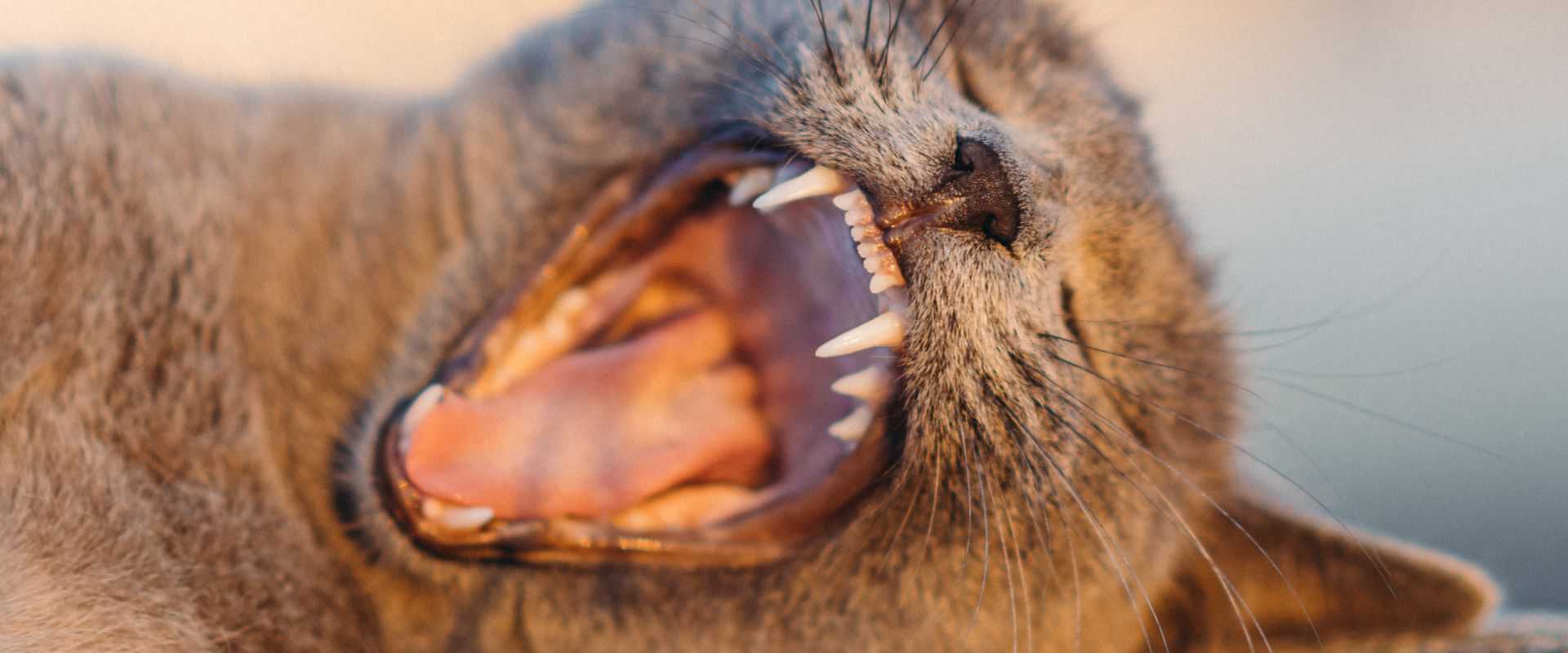
If you find yourself leaning away when your cat yawns near your face, the question is a fair one: why does my cat's breath smell? Feline breath should be unremarkable. When it turns genuinely unpleasant, the smell is usually coming from bacteria in an inflamed, infected or sore mouth, and that deserves investigating rather than tolerating. This guide covers what causes bad breath in cats, why dental disease so often goes unnoticed for years, which signs point to real pain, and when to pick up the phone.
None of this replaces an examination. A vet needs to look inside your cat's mouth, and usually needs X-rays, to know what is actually going on.
What does bad breath in cats usually mean?
Almost always, the answer is in the mouth itself. Plaque, a soft film of bacteria, collects on the teeth and particularly at the gum line. Cornell University's feline health experts explain that plaque hardens as it absorbs minerals from saliva and the gum tissue, turning into calculus (tartar), a rough surface that disease-causing bacteria then cling to. It is not the tartar itself that inflames the gums. It is the bacterial population living on and under it, which shifts over time away from harmless species toward ones that damage tissue.
Halitosis, the medical word for bad breath, sits at the top of the list of signs the Merck Veterinary Manual gives for periodontal disease, alongside visible plaque and tartar, inflamed or bleeding gums, receding gums, pockets around the roots, bone loss and eventually loose or lost teeth.
So bad breath is not the disease. It is the smell of a disease process that has been running quietly for a while.
What is periodontal disease in cats?
Periodontal disease means infection and inflammation of everything that holds a tooth in place: the gum, the periodontal ligament, the cementum covering the root, and the bone of the jaw. It begins as gingivitis, where inflammation is confined to the gum and can still be reversed with thorough cleaning and good home care. Left alone, it becomes periodontitis, where attachment is lost, gums recede, pockets form and bone is destroyed. Bone loss at that stage does not come back. You can halt the process, but you cannot undo it.
It is remarkably common. The American Association of Feline Practitioners puts the figure at up to 85% of cats showing signs of gum disease by two years of age, and studies quoted by Cornell report that between half and 90% of cats over four years old have some form of dental disease. Periodontal disease also has effects beyond the mouth: it has been linked with an increased risk of chronic kidney disease in small animals, though the direction of that relationship is not fully worked out.
Why is feline dental disease so often missed?
Three reasons, and they reinforce each other.
Cats are experts at hiding pain. A cat with a painful mouth will very often keep eating, and owners read that, reasonably enough, as a sign that all is well. Do not expect appetite to change. A cat in months of low-grade discomfort has few ways to tell you, other than chewing on one side, tilting the head while eating, dropping food, pawing at the mouth, or becoming less tolerant of being touched around the face.
Most of the damage is out of sight. Roughly 60% of each tooth sits below the gum line, where bone loss, root resorption and abscesses develop unseen. A conscious look at the outer surfaces of the cheek teeth simply cannot detect them.
Pain is under-recognised even in the clinic. A study of cats presenting for routine procedures found that cats with dental disease showed pain during examination, and that pain scores rose as the disease got worse. Bad breath, drooling, obvious mouth discomfort, difficulty holding food and repeated attempts to pick food up were all linked to higher pain scores, as was the number of missing teeth.
Tooth resorption: the one owners have usually never heard of
Tooth resorption is a process in which the tooth's own mineralised tissue is destroyed and eventually lost. According to the Merck Veterinary Manual, more than 60% of cats show evidence of it during their lifetime, it is painful, and it is a major cause of tooth loss. Older cats and purebred cats are affected more often. Despite decades of research, no single cause has been identified.
The catch is detection. Reported prevalence ranges widely, from about 29% to 67%, and a specialist review of the condition notes that visual and touch examination only picks up late-stage lesions, the ones that have already broken through into the crown. Radiographs are what allow timely diagnosis, because resorption can start anywhere along the root.
Treatment means removing the affected tooth, or amputating the crown in selected cases, with the aim of taking away the source of pain. There is no filling and no medication that reverses it.
Chronic gingivostomatitis: when the whole mouth is inflamed
Less commonly, cats develop feline chronic gingivostomatitis, a severe and ongoing inflammation of the gums and the wider lining of the mouth that causes real pain and discomfort. These cats often have particularly foul breath, drool, and approach food then back away. Extraction of teeth is one of the main surgical treatments used in cats with gingivostomatitis, as it is for tooth resorption and advanced periodontal disease. If your vet raises full-mouth or near-full-mouth extractions, ask them to talk you through what they found on the X-rays and why.
When is bad breath not about the teeth?
Sometimes the mouth is a window onto something else. Gingivitis and mouth sores can be triggered by infectious or whole-body illness, including feline leukaemia virus, feline immunodeficiency virus, calicivirus, severe kidney disease, diabetes and autoimmune disease. When one of these is behind it, inflammation and ulcers often appear on other parts of the mouth lining, not just at the gum margin.
That is why a cat with bad breath plus increased thirst, increased urination or weight loss needs blood and urine tests rather than a dental appointment alone. If those particular signs sound familiar, our guide to the early signs of diabetes in cats explains what to measure at home before you go in.
Anaesthetised dental procedures also serve as a screening opportunity for oral cancer, inflammatory disease and problems inside the tooth, which is one reason a proper look under anaesthesia matters in an older cat with a sudden change in breath.
What should I check at home?
Do this gently, in good light, when your cat is relaxed. Stop if she objects. A painful mouth is exactly the mouth that will bite.
- Lift the upper lip on each side and look where gum meets tooth. Healthy gum is a pale coral pink with a thin, crisp margin.
- Look for a colour change to red or purple, a swollen or rolled gum edge, gums that bleed when touched, brown tartar, or a tooth that looks shorter or has red tissue growing into a defect at the neck.
- Check both sides of the face for asymmetry. Swelling under an eye or along the jaw can mean an abscess at a tooth root.
- Watch a normal meal. Note head tilting, chewing on one side, dropped food, repeated attempts to pick up a piece, or walking away part way through.
- Note drooling, especially if it is blood-tinged, and whether her coat has become scruffy because she has stopped grooming.
Take a photo if you can and write down what you saw. It genuinely helps at the appointment.
When to call the vet
Book a routine appointment if your cat has persistent bad breath, visible tartar or a red gum line, even if she is eating well and seems content. Breath that has smelled bad "for ages" is not a reason to wait. It is the reason to go.
Contact your vet promptly, or seek urgent care, if you notice:
- Refusal to eat, or eating far less than usual, since dental disease that stops a cat eating leads on to other health problems
- Bleeding from the gums or mouth, or blood-tinged drool
- A swelling on the face or under the jaw, which may be a tooth root abscess
- A loose tooth, a visible mass or a sore in the mouth that does not heal
- Pawing at the mouth, crying at the food bowl or obvious distress when eating
- Bad breath together with increased drinking, increased urination or weight loss
If your cat has gone off food entirely, do not wait it out. Our guide on what to do when a cat stops eating covers the safe things to try and the point at which it becomes an emergency.
What will the vet actually do?
An awake exam gives a first impression, and most cats should have their mouth checked at a routine appointment every six to twelve months. A full assessment, though, needs general anaesthesia: a complete oral exam, probing of the gaps between gum and tooth, full-mouth X-rays, scaling above and below the gum line, polishing, and treatment of whatever is found, including extractions, all in the same session. Pain relief starts before the procedure and continues afterwards, and most cats go home the same day.
Expect pre-anaesthetic blood and urine testing to check kidney and liver function, which also helps flag the non-dental causes of bad breath. Fear of anaesthesia is the single most common reason owners put dental treatment off, but when it is administered by a trained veterinary team the risk is small compared with leaving painful disease untreated.
One point worth being firm about: anaesthesia-free tooth scraping, offered by some non-veterinary providers, removes tartar from the visible surfaces only. The American Veterinary Dental College states plainly that it is neither a replacement for a proper dental procedure nor an effective way to prevent dental disease, because the subgingival surfaces where periodontal disease is active cannot be reached in an awake animal. The effect is cosmetic, and it delays real treatment.
How do I stop it coming back?
- Brush, ideally every day: the Royal Veterinary College describes toothbrushing as by far the most effective way of controlling plaque and gum disease at home, with daily brushing ideal and even three times a week making a real difference
- Use cat toothpaste and a cat toothbrush: International Cat Care warns that human toothpaste is unpalatable to cats and can irritate the stomach, and advises a separate brush for each cat in the household so infection is not passed between them in saliva
- Build up slowly: start with gentle handling around the head, then toothpaste licked off your finger, then lifting the lip, then a soft-bristled brush. Aim for the outer surfaces where tooth meets gum, especially the upper canines and back teeth. Silicone finger brushes carry a bite risk and do not clean below the gum line
- Start young where you can: kittens usually accept mouth handling quickly, and building it into a daily routine from the first vet visits pays off for years. An adult cat can still learn, it just takes more patience
- Treat diets, chews and gels as second best: they can help, particularly for a cat who refuses brushing, but none of them match a toothbrush. Look for products carrying Veterinary Oral Health Council acceptance, and ask your vet before switching a cat with a sore mouth onto a hard dental diet
- Keep up professional assessments: periodic dental procedures under anaesthesia, including full-mouth radiographs, are worthwhile even when nothing obvious is visible, at intervals your vet sets
Bad breath is usually the first thing an owner notices about a cat's mouth, and it is also the easiest thing to shrug off. If your cat's breath has changed, treat it as information rather than a quirk. A dental exam is a small inconvenience next to months of a cat quietly eating around a painful tooth.